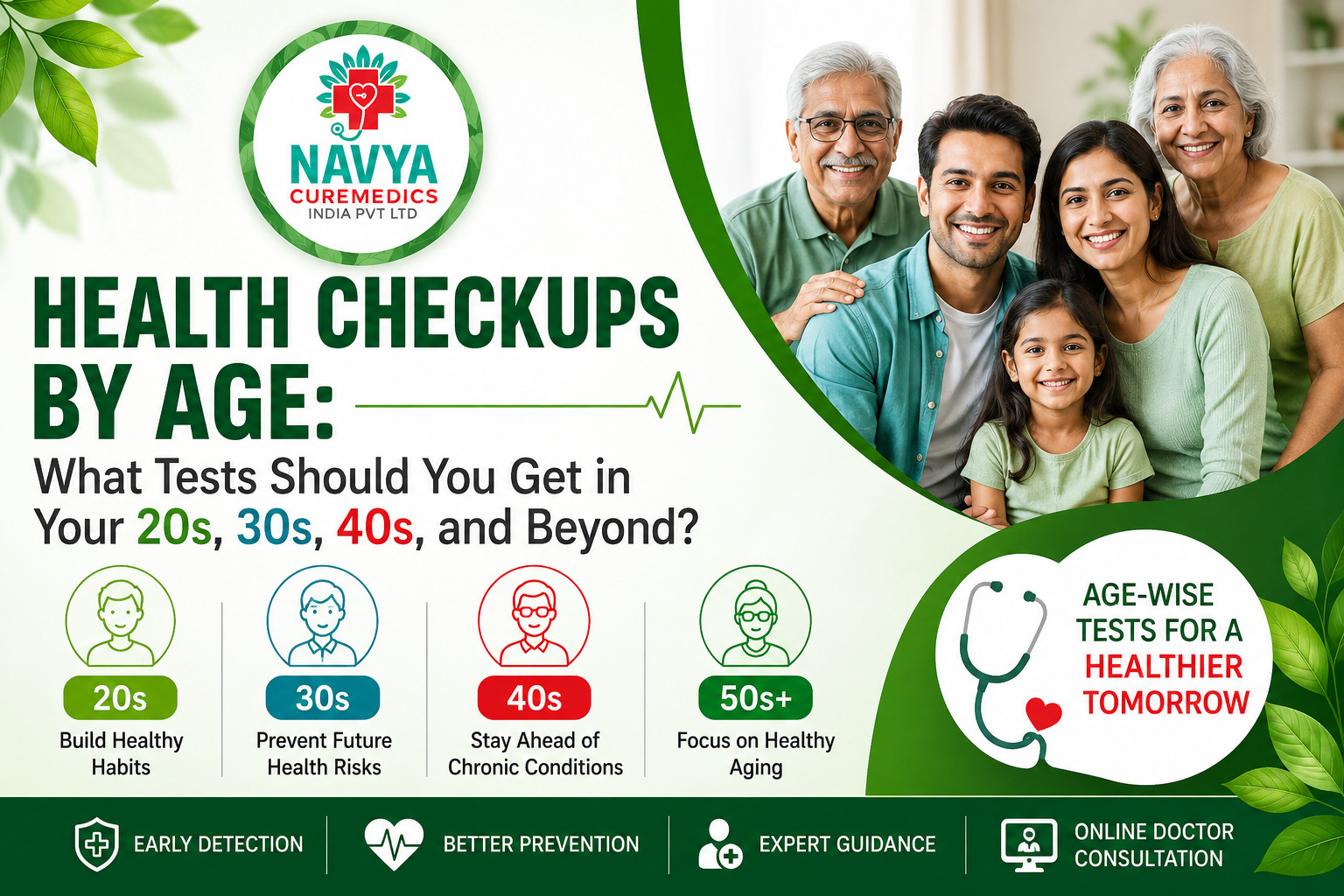
Health Checkups by Age: What Tests Should You Get in Your 20s, 30s, 40s, and Beyond?
By Navya Curemedics India PVT. LTD.
June 01, 2026
Tips
Introduction
Many people only visit a doctor when they experience symptoms or health concerns. However, preventive healthcare plays a crucial role in maintaining overall wellness and detecting health issues before they become serious. Regular health checkups can help identify risk factors, monitor vital health indicators, and provide early treatment when necessary.
As we grow older, our body's needs change. The health screenings recommended in your 20s are often different from those needed in your 30s, 40s, and later years. Understanding the right tests to take at every stage of life can help you stay healthier and reduce the risk of chronic diseases.
In this comprehensive guide, we'll discuss the essential health checkups by age and explain why they are important for long-term well-being.
Why Are Regular Health Checkups Important?
Routine health screenings help healthcare professionals identify potential health problems before symptoms appear. Early detection often leads to more effective treatment and better outcomes.
Benefits of regular health checkups include:
Early detection of diseases
Monitoring blood pressure, cholesterol, and blood sugar levels
Identifying lifestyle-related health risks
Preventing serious health complications
Improving quality of life
Reducing long-term healthcare expenses
Preventive healthcare is one of the smartest investments you can make for your future health.
Health Checkups in Your 20s
Your 20s are often considered the foundation years for lifelong health. While most young adults feel healthy, this is the ideal time to establish healthy habits and identify any underlying medical conditions.
Recommended Tests
Blood Pressure Screening
Monitor blood pressure at least once every two years if readings are normal.
Body Mass Index (BMI) Assessment
BMI helps determine whether you are within a healthy weight range.
Blood Sugar Test
People with a family history of diabetes or obesity should monitor blood sugar levels regularly.
Cholesterol Screening
A lipid profile should be conducted every four to six years or more frequently if risk factors exist.
Mental Health Assessment
Stress, anxiety, and depression can affect individuals during young adulthood. Mental health evaluations are equally important as physical health screenings.
Sexual and Reproductive Health Screening
Routine reproductive health examinations and sexually transmitted infection (STI) screenings should be considered when appropriate.
Healthy Lifestyle Goals
Exercise regularly
Eat a balanced diet
Maintain a healthy weight
Avoid smoking and excessive alcohol consumption
Prioritize quality sleep
Health Checkups in Your 30s
During your 30s, work responsibilities, family commitments, and lifestyle habits can significantly impact your health. This decade is crucial for preventing chronic diseases.
Recommended Tests
Annual Blood Pressure Check
High blood pressure often develops without symptoms and should be monitored regularly.
Blood Sugar Screening
Individuals with risk factors should undergo diabetes screening every one to three years.
Lipid Profile
Regular cholesterol testing helps assess cardiovascular risk.
Thyroid Function Test
Thyroid disorders become more common, especially among women.
Eye Examination
Routine eye exams help detect vision problems and eye diseases early.
Dental Checkups
Professional dental examinations every six to twelve months support oral health.
Women's Health Screenings
Pap smear
HPV screening
Clinical breast examination
Healthy Lifestyle Goals
Manage stress effectively
Maintain an active lifestyle
Follow a balanced diet
Monitor weight regularly
Health Checkups in Your 40s
By your 40s, the risk of developing chronic health conditions increases significantly. Regular screenings become essential for maintaining good health.
Recommended Tests
Comprehensive Health Checkup
Annual health evaluations should include blood tests and a complete physical examination.
Diabetes Screening
Regular blood sugar monitoring helps identify diabetes at an early stage.
Heart Health Assessment
Heart health screenings may include:
Electrocardiogram (ECG)
Cholesterol profile
Blood pressure monitoring
Liver and Kidney Function Tests
These tests evaluate organ function and detect early signs of disease.
Eye and Hearing Tests
Age-related changes in vision and hearing often begin during this decade.
Cancer Screenings
Depending on age, gender, and family history:
Breast cancer screening
Cervical cancer screening
Prostate health assessment
Healthy Lifestyle Goals
Follow a heart-friendly diet
Stay physically active
Reduce stress levels
Get sufficient sleep
Health Checkups in Your 50s and Beyond
After the age of 50, health screenings focus on detecting age-related diseases and preserving quality of life.
Recommended Tests
Colon Cancer Screening
Most healthcare providers recommend screening between ages 45 and 50.
Bone Density Test
Particularly important for postmenopausal women and individuals at risk of osteoporosis.
Cardiovascular Screening
Regular monitoring of heart health remains essential.
Diabetes Monitoring
Annual blood sugar and HbA1c testing help manage diabetes risk.
Vision and Hearing Assessments
Regular evaluations can detect cataracts, glaucoma, and hearing loss.
Prostate Screening for Men
Men should discuss PSA testing and prostate health assessments with their healthcare provider.
Vaccination Review
Stay updated with:
Influenza vaccine
Pneumococcal vaccine
Shingles vaccine
Healthy Aging Goals
Maintain physical activity
Follow a nutrient-rich diet
Stay socially connected
Focus on mental well-being
Symptoms That Should Never Be Ignored
Regardless of age, seek medical advice if you experience:
Persistent fatigue
Unexplained weight loss
Frequent headaches
Chest pain
Shortness of breath
Sudden vision changes
Chronic digestive problems
Early diagnosis can significantly improve treatment outcomes.
The Role of Online Doctor Consultations in Preventive Healthcare
Modern healthcare solutions make it easier than ever to stay proactive about your health. Online doctor consultations allow patients to connect with qualified healthcare professionals from the comfort of their homes.
Benefits include:
Convenient access to medical advice
Review of diagnostic reports
Follow-up consultations
Preventive healthcare guidance
Reduced travel and waiting times
Online healthcare services can help individuals maintain regular health monitoring and receive timely medical support.
Tags:
Tele Consultation vs OPDOnline Doctor vs Clinic VisitTelemedicine Benefits IndiaMinor Diseases Treatment OnlineNavya Curemedics
← Back to all blogs