Infertility Myths vs Facts | Fertility Specialists
By Navya Curemedics India Pvt. Ltd
June 30, 2026
Tips
Infertility Myths vs Facts: Separating Truth from Misconceptions
Introduction
Infertility affects millions of couples worldwide, yet it remains surrounded by myths, misconceptions, and misinformation. These myths often prevent couples from seeking timely medical advice, delaying diagnosis and treatment.
The truth is that infertility is a medical condition—not a personal failure—and modern reproductive medicine offers many effective treatment options.
In this article, we'll debunk some of the most common infertility myths and explain the facts backed by medical science.
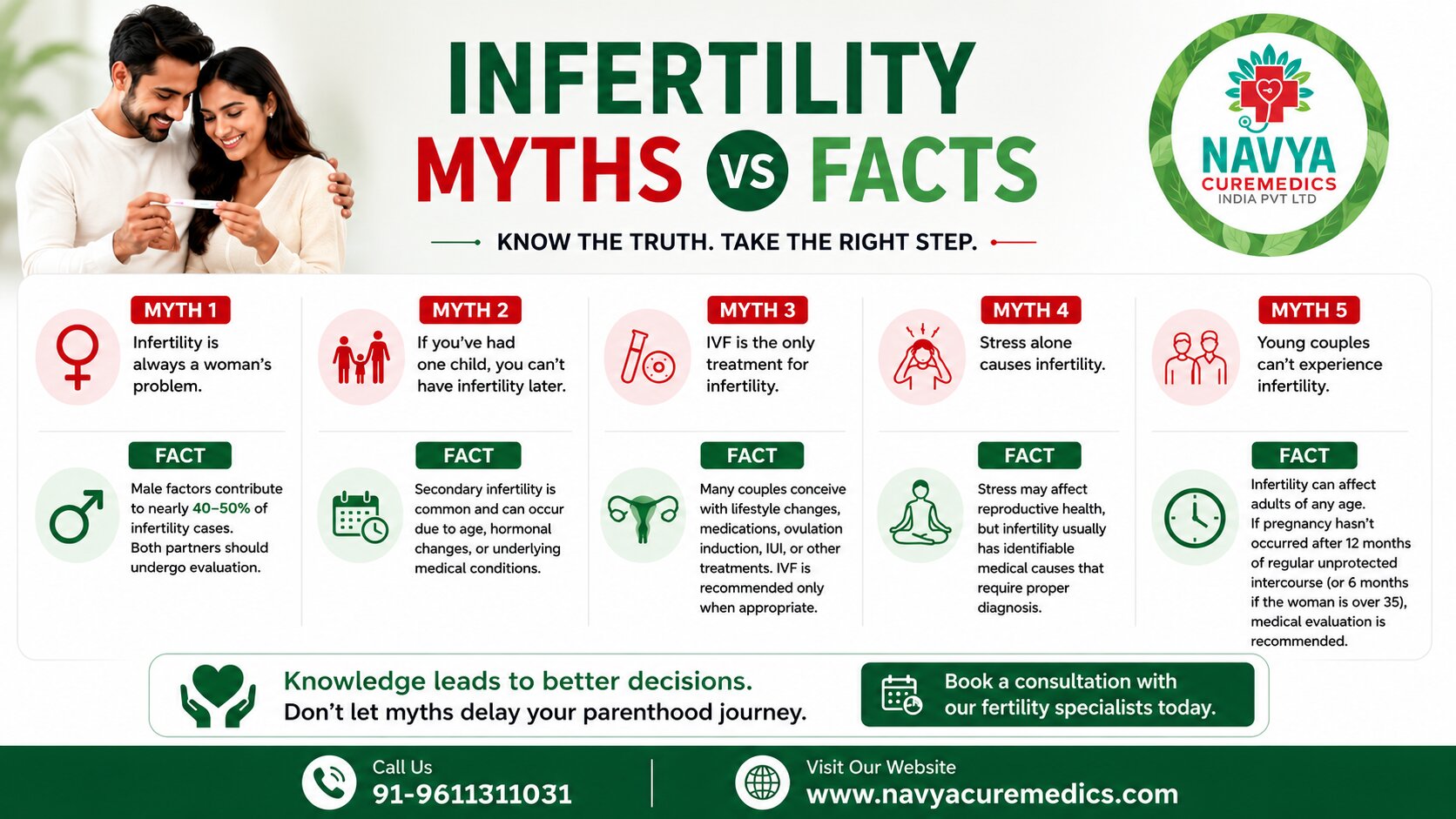
Myth 1: Infertility Is Always a Woman's Problem
Fact:
This is one of the biggest misconceptions.
Medical research shows that male infertility contributes to nearly 40–50% of infertility cases, while female factors account for another significant portion. In some cases, infertility is caused by a combination of both partners' health conditions or remains unexplained.
Common male infertility causes include:
Low sperm count
Poor sperm motility
Abnormal sperm morphology
Hormonal imbalance
Varicocele
Both partners should undergo fertility evaluation together.
Myth 2: IVF Is the Only Treatment for Infertility
Fact:
IVF is only one of several fertility treatments.
Depending on the underlying cause, many couples conceive successfully with:
Lifestyle modifications
Ovulation induction medications
Hormonal therapy
Intrauterine Insemination (IUI)
Surgery for reproductive disorders
IVF is usually recommended only when other treatments are unlikely to succeed or have already failed.
Myth 3: Stress Alone Causes Infertility
Fact:
Stress may affect hormone balance and sexual health, but it is rarely the primary cause of infertility.
Medical conditions such as:
PCOS
Endometriosis
Blocked fallopian tubes
Low ovarian reserve
Thyroid disorders
Male factor infertility
are much more common causes and require professional evaluation.
Myth 4: Young Couples Cannot Have Fertility Problems
Fact:
Although fertility generally declines with age, infertility can affect adults in their 20s and early 30s as well.
Risk factors include:
Hormonal disorders
Genetic conditions
Obesity
Smoking
Diabetes
Sexually transmitted infections
If pregnancy has not occurred after:
12 months of regular unprotected intercourse (under age 35)
6 months (age 35 or older)
a fertility consultation is recommended.
Myth 5: Having One Child Means You Can't Become Infertile
Fact:
This condition is called Secondary Infertility.
A couple who conceived naturally before may later experience fertility difficulties due to:
Increasing age
Hormonal changes
Weight gain
Endometriosis
Reduced sperm quality
Medical illnesses
Secondary infertility is common and treatable.
Myth 6: Lifestyle Doesn't Affect Fertility
Fact:
Daily habits have a major impact on reproductive health.
Healthy lifestyle choices include:
Maintaining a healthy weight
Regular physical activity
Quitting smoking
Limiting alcohol
Eating a balanced diet
Managing stress
Getting adequate sleep
These changes can improve fertility naturally in many cases.
Myth 7: Fertility Testing Is Painful
Fact:
Most fertility tests are simple and minimally invasive.
Common fertility investigations include:
For Women
AMH Test
Hormonal Profile
Ultrasound
Ovulation Assessment
HSG (when indicated)
For Men
Semen Analysis
Hormone Testing
Physical Examination
Early testing helps identify problems before they become more difficult to treat.
When Should You Consult a Fertility Specialist?
Seek medical advice if:
✔ You're under 35 and have tried to conceive for over one year.
✔ You're over 35 and have tried for six months.
✔ You have irregular periods.
✔ You have PCOS or endometriosis.
✔ You have experienced recurrent miscarriages.
✔ The male partner has known fertility concerns.
Early diagnosis often leads to better treatment outcomes.
Conclusion
Infertility myths often create unnecessary fear and delay appropriate medical care. The good news is that many infertility conditions are treatable with timely diagnosis and personalized care.
Rather than relying on myths or online misinformation, consult an experienced fertility specialist who can guide you toward the most appropriate treatment plan for your unique situation.
Remember, every fertility journey is different—and seeking expert advice is the first step toward achieving your dream of parenthood.
Why Choose Navya Curemedics?
At Navya Curemedics, our fertility specialists provide comprehensive evaluation and personalized treatment plans for couples facing infertility.
Our services include:
Fertility Assessment
Male & Female Infertility Treatment
IVF Consultation
IUI Treatment
Ovulation Induction
Hormonal Evaluation
Pregnancy Planning
Lifestyle Counseling
📞 Call: +91-9611311031
🌐 Website: https://www.navyacuremedics.com
FAQs
Is infertility only a woman's problem?
No. Male infertility contributes to approximately 40–50% of infertility cases. Both partners should be evaluated.
Is IVF necessary for everyone?
No. Many couples conceive successfully through medications, lifestyle changes, IUI, or other fertility treatments without IVF.
Can stress alone cause infertility?
Stress may influence reproductive health but is rarely the only cause. Medical evaluation is essential.
When should I get fertility testing?
If you've been trying to conceive for one year (or six months if you're over 35), consult a fertility specialist.
Can lifestyle changes improve fertility?
Yes. Maintaining a healthy weight, eating a balanced diet, exercising regularly, quitting smoking, and limiting alcohol can improve fertility in many individuals.
Tags:
Fertility Testing AMHTest PCOSand Fertility Ovulation Problems IUI TreatmentIVF Success Couples Tryingto Conceive ReproductiveHealth Women's Health Men's Health
← Back to all blogs