7 Health Tests Everyone Should Do After Age 30
By Navya Curemedics India Pvt. Ltd
July 01, 2026
Tips
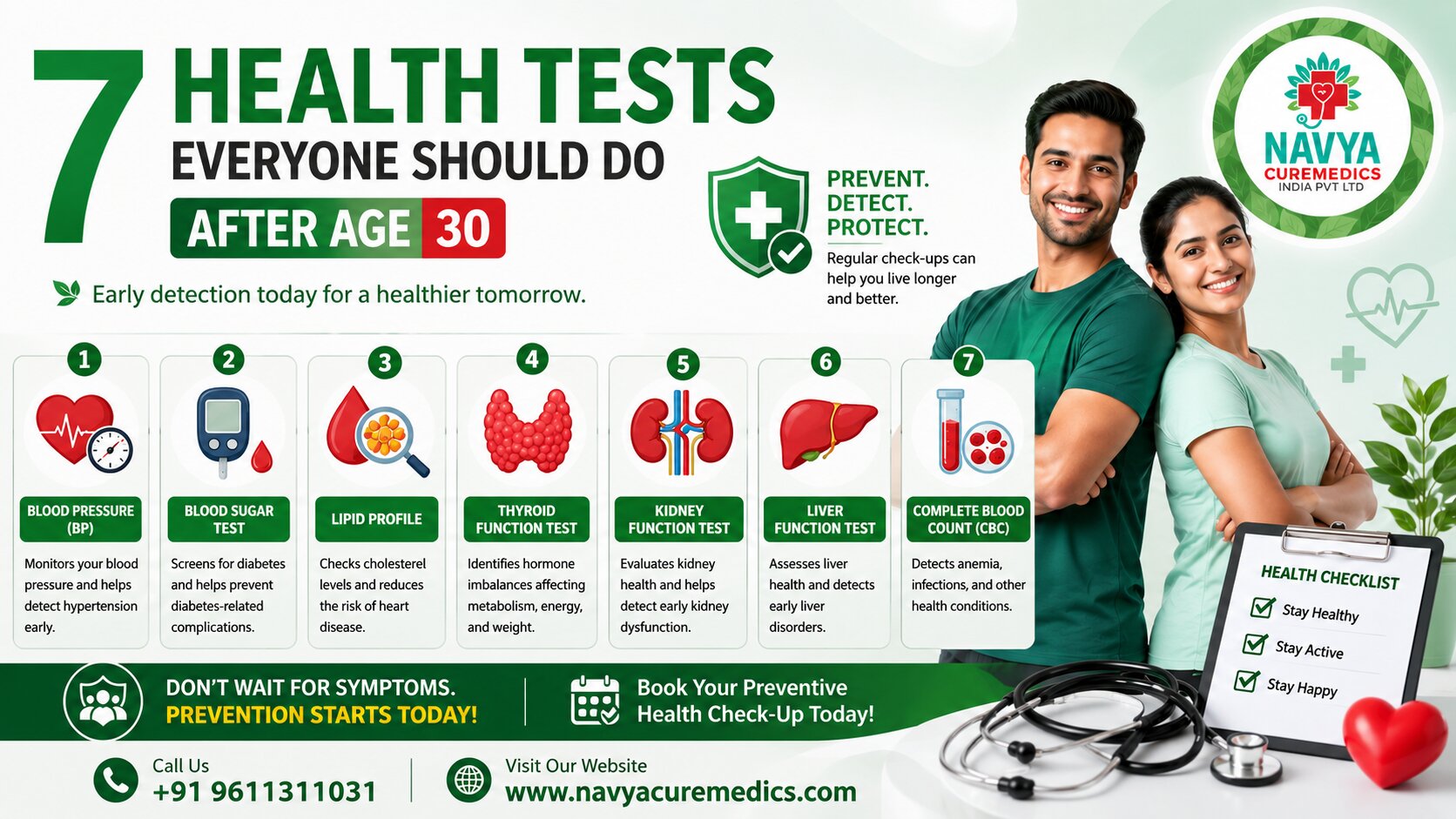
7 Health Tests Everyone Should Do After Age 30
Turning 30 is a significant milestone—not just in life but also for your health. While you may feel energetic and healthy, many chronic conditions such as diabetes, high blood pressure, thyroid disorders, liver disease, and high cholesterol often develop silently without noticeable symptoms.
The good news is that regular preventive health checkups can identify these conditions early, allowing timely treatment and reducing the risk of serious complications.
Here are the 7 essential health tests everyone should consider after the age of 30.
Why Preventive Health Checkups Matter After 30
After the age of 30, your metabolism naturally slows down, stress levels often increase, and lifestyle-related diseases become more common. Routine health screenings help you:
Detect diseases before symptoms appear
Reduce treatment costs through early diagnosis
Prevent serious health complications
Monitor your overall health
Improve quality of life
Think of preventive health checkups as an investment in your future.
1. Complete Blood Count (CBC)
A Complete Blood Count (CBC) is one of the most common and important blood tests. It provides an overview of your overall health by measuring different components of your blood.
What Does It Detect?
Anemia
Bacterial or viral infections
Blood disorders
Immune system abnormalities
Why It Matters
Many health problems first appear as changes in your blood count. A CBC helps doctors identify issues before they become severe.
2. Blood Sugar Test (Fasting Blood Glucose)
Diabetes is one of the fastest-growing lifestyle diseases worldwide. Unfortunately, many people don't realize they have diabetes until complications develop.
This Test Helps Detect:
Diabetes
Prediabetes
Blood sugar abnormalities
Recommended Frequency
Once every year after age 30—or more frequently if you have a family history of diabetes.
3. Lipid Profile
Heart disease remains one of the leading causes of death globally. A lipid profile measures the amount of cholesterol and fats in your blood.
It Includes
Total Cholesterol
HDL (Good Cholesterol)
LDL (Bad Cholesterol)
Triglycerides
Why It's Important
High cholesterol usually has no symptoms but significantly increases the risk of heart attack and stroke.
4. Liver Function Test (LFT)
Your liver performs more than 500 essential functions in the body, including detoxification, digestion, and metabolism.
A Liver Function Test checks whether your liver is functioning properly.
It Can Detect
Fatty Liver Disease
Hepatitis
Liver Damage
Alcohol-related Liver Problems
Who Should Get It?
Everyone over 30, especially people who are overweight, diabetic, or consume alcohol regularly.
5. Kidney Function Test (KFT)
Healthy kidneys remove toxins and maintain the body's fluid balance.
Kidney disease often progresses silently.
The Test Evaluates
Creatinine
Blood Urea
Electrolytes
Estimated Kidney Function
Benefits
Early kidney disease detection
Monitoring kidney health
Preventing kidney failure
6. Thyroid Profile
The thyroid gland controls metabolism, body temperature, weight, mood, and energy levels.
Symptoms of Thyroid Problems
Fatigue
Weight gain
Weight loss
Hair fall
Depression
Anxiety
A thyroid profile helps detect both hypothyroidism and hyperthyroidism before complications occur.
7. Cancer Screening (Based on Age & Risk Factors)
Cancer screening recommendations depend on age, gender, family history, and lifestyle.
Common Screenings Include
Women
Breast Cancer Screening (Mammography)
Cervical Cancer Screening (Pap Smear)
Men
Prostate Cancer Screening
Both
Colon Cancer Screening
Oral Cancer Screening
Skin Cancer Examination
Early diagnosis dramatically improves treatment outcomes.
Additional Health Tests You Should Consider
Depending on your health history, your doctor may also recommend:
Vitamin D Test
Vitamin B12 Test
Blood Pressure Monitoring
ECG
HbA1c Test
Urine Analysis
Eye Examination
Dental Checkup
Healthy Lifestyle Tips After 30
Health tests are important, but prevention starts with healthy habits.
Follow These Daily
✔ Exercise for at least 30 minutes
✔ Eat a balanced diet rich in fruits and vegetables
✔ Stay hydrated
✔ Sleep 7–8 hours
✔ Avoid smoking and excessive alcohol
✔ Manage stress through yoga or meditation
✔ Maintain a healthy weight
✔ Get an annual health checkup
When Should You Get a Full Body Health Checkup?
You should schedule a comprehensive health screening if you:
Are over 30 years old
Have a family history of diabetes or heart disease
Are overweight
Have high blood pressure
Smoke or consume alcohol regularly
Lead a sedentary lifestyle
Experience unexplained fatigue or weight changes
Annual preventive checkups are the best way to stay ahead of potential health issues.
Conclusion
Your health is your greatest asset, and preventive care is the key to protecting it. After age 30, routine health screenings can detect diseases early, improve treatment outcomes, and help you lead a healthier, more active life.
Don't wait for symptoms to appear. Taking proactive steps today can prevent serious health problems tomorrow.
Schedule your annual health checkup and make preventive healthcare a priority.
Frequently Asked Questions (FAQs)
1. Why should I get health tests after turning 30?
As you age, the risk of lifestyle-related diseases such as diabetes, hypertension, and thyroid disorders increases. Regular health tests help detect these conditions early.
2. How often should I undergo preventive health screening?
Most adults over 30 should have a comprehensive health checkup once a year. Your doctor may recommend more frequent testing based on your health history.
3. Are these health tests necessary even if I feel healthy?
Yes. Many serious conditions develop without symptoms in the early stages. Preventive screening helps identify problems before they become severe.
4. How long does a full body health checkup take?
A comprehensive health checkup usually takes between 2 and 4 hours, depending on the tests included.
5. Can lifestyle changes reduce the need for frequent testing?
Healthy habits such as regular exercise, balanced nutrition, stress management, and avoiding tobacco can lower your risk of disease. However, routine screenings are still important for early detection.
SEO Keywords
7 Health Tests Everyone Should Do After Age 30
Preventive Health Checkup
Health Checkup After 30
Full Body Checkup
CBC Test
Blood Sugar Test
Lipid Profile
Liver Function Test
Kidney Function Test
Thyroid Profile
Cancer Screening
Annual Health Checkup
Preventive Healthcare
Early Disease Detection
Healthy Lifestyle After 30
Tags:
7 Health Tests Everyone Should Do After Age 30 Preventive Health Checkup Health Checkup After 30 Full Body Checkup CBC Test Blood Sugar Test Lipid Profile Liver Function Test Kidney Function Test Thyroid Profile Cancer Screening Annual Health Checkup Preventive Healthcare Early Disease Detection Healthy Lifestyle After 30
← Back to all blogs