Why Does Diabetes Damage the Kidneys Without Symptoms?
By Navya Curemedics India Pvt. Ltd
July 02, 2026
Tips
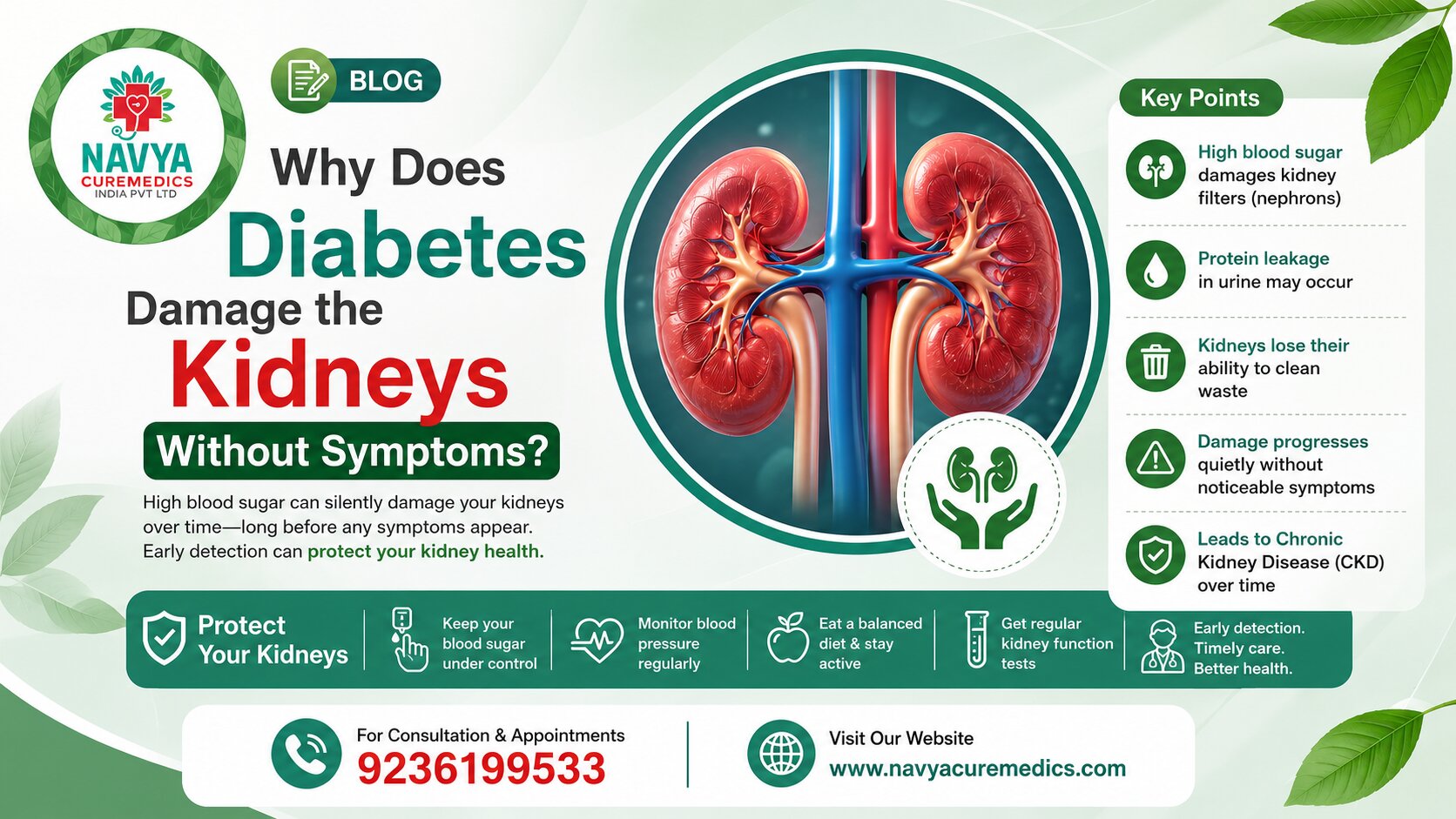
Why Does Diabetes Damage the Kidneys Without Symptoms?
Diabetes is one of the leading causes of chronic kidney disease (CKD) worldwide. What makes diabetic kidney disease particularly dangerous is that it often develops silently. Many people experience no noticeable symptoms until significant kidney damage has already occurred.
Understanding how diabetes affects the kidneys and why early detection matters can help you take steps to protect your health.
How Do the Kidneys Work?
Your kidneys act as the body's natural filtration system. They remove waste products, excess fluids, and toxins from your blood while maintaining the right balance of water, minerals, and electrolytes.
Each kidney contains around one million tiny filtering units called nephrons. These delicate filters are responsible for cleaning your blood every day.
How Does Diabetes Damage the Kidneys?
When blood sugar remains high for months or years, it puts excessive pressure on the tiny blood vessels inside the kidneys.
Over time, high glucose levels:
Damage the kidney filters (nephrons)
Reduce filtering efficiency
Cause protein leakage into urine
Increase blood pressure inside the kidneys
Lead to permanent kidney scarring
If left untreated, this can eventually progress to Chronic Kidney Disease (CKD) or kidney failure.
Why Are There No Symptoms in the Early Stages?
Kidneys have a remarkable ability to continue functioning even after losing a significant portion of their filtering capacity.
Early kidney damage usually does not cause pain or discomfort.
Most people feel completely healthy while kidney disease slowly progresses.
Symptoms generally appear only after extensive damage has occurred.
Early Warning Signs of Diabetic Kidney Disease
Although early stages may be symptom-free, advanced kidney disease can cause:
Swelling in feet and ankles
Persistent fatigue
Frequent urination
Foamy urine
High blood pressure
Loss of appetite
Difficulty concentrating
Nausea
Shortness of breath
If you have diabetes, don't wait for symptoms before getting tested.
Who Is at Higher Risk?
Your risk increases if you have:
Type 1 or Type 2 Diabetes
Poor blood sugar control
High blood pressure
Obesity
High cholesterol
Smoking habit
Family history of kidney disease
Diabetes for more than 5–10 years
Tests That Detect Kidney Damage Early
Doctors recommend regular kidney screening for people with diabetes.
Important tests include:
Kidney Function Test (KFT)
Measures kidney performance.
Urine Albumin Test
Detects protein leakage before symptoms appear.
Serum Creatinine
Checks kidney filtering ability.
Estimated Glomerular Filtration Rate (eGFR)
Measures overall kidney function.
Blood Pressure Monitoring
High blood pressure speeds up kidney damage.
How to Protect Your Kidneys
Simple lifestyle changes can significantly reduce your risk.
Keep Blood Sugar Under Control
Maintain HbA1c within your doctor's recommended range.
Control Blood Pressure
Aim for healthy blood pressure levels.
Eat a Kidney-Friendly Diet
Reduce salt, processed foods, and sugary drinks.
Stay Physically Active
Exercise at least 30 minutes daily.
Drink Enough Water
Stay hydrated unless advised otherwise by your doctor.
Avoid Smoking
Smoking worsens kidney damage and reduces blood circulation.
Get Annual Kidney Checkups
Routine screening helps detect problems before symptoms develop.
Can Kidney Damage Be Reversed?
Early diabetic kidney disease can often be slowed or prevented with proper diabetes management.
However, advanced kidney damage cannot usually be reversed.
This is why early detection is essential.
Conclusion
Diabetes can silently damage your kidneys for years without causing noticeable symptoms. Regular health checkups, blood sugar control, and kidney function tests are the best ways to detect problems early and prevent serious complications.
If you have diabetes, don't wait for symptoms. Make kidney health a priority and schedule routine screenings to protect your future.
Frequently Asked Questions (FAQs)
1. Why doesn't diabetic kidney disease cause symptoms early?
The kidneys can continue functioning even after losing a significant amount of filtering capacity, so symptoms often appear only in advanced stages.
2. How often should people with diabetes have kidney tests?
Most people with diabetes should have kidney function tests at least once a year, or more often if recommended by their doctor.
3. Can controlling blood sugar prevent kidney damage?
Yes. Maintaining healthy blood sugar levels significantly lowers the risk of diabetic kidney disease.
4. What is the first sign of diabetic kidney disease?
Protein in the urine (albuminuria) is often the earliest detectable sign, even before symptoms appear.
5. Can kidney disease from diabetes be cured?
Early-stage kidney damage may be slowed or prevented with proper treatment, but advanced damage is usually irreversible.
Tags:
Diabetes kidney diseasediabetic kidney diseasediabetic nephropathydiabetes kidney damagekidney disease symptomsdiabetes complicationskidney healthkidney function testCKDhigh blood sugarpreventive healthcareZero Step Health
← Back to all blogs