AMH Test Explained Before IVF
By Navya Curemedics India Pvt. Ltd
July 04, 2026
Tips
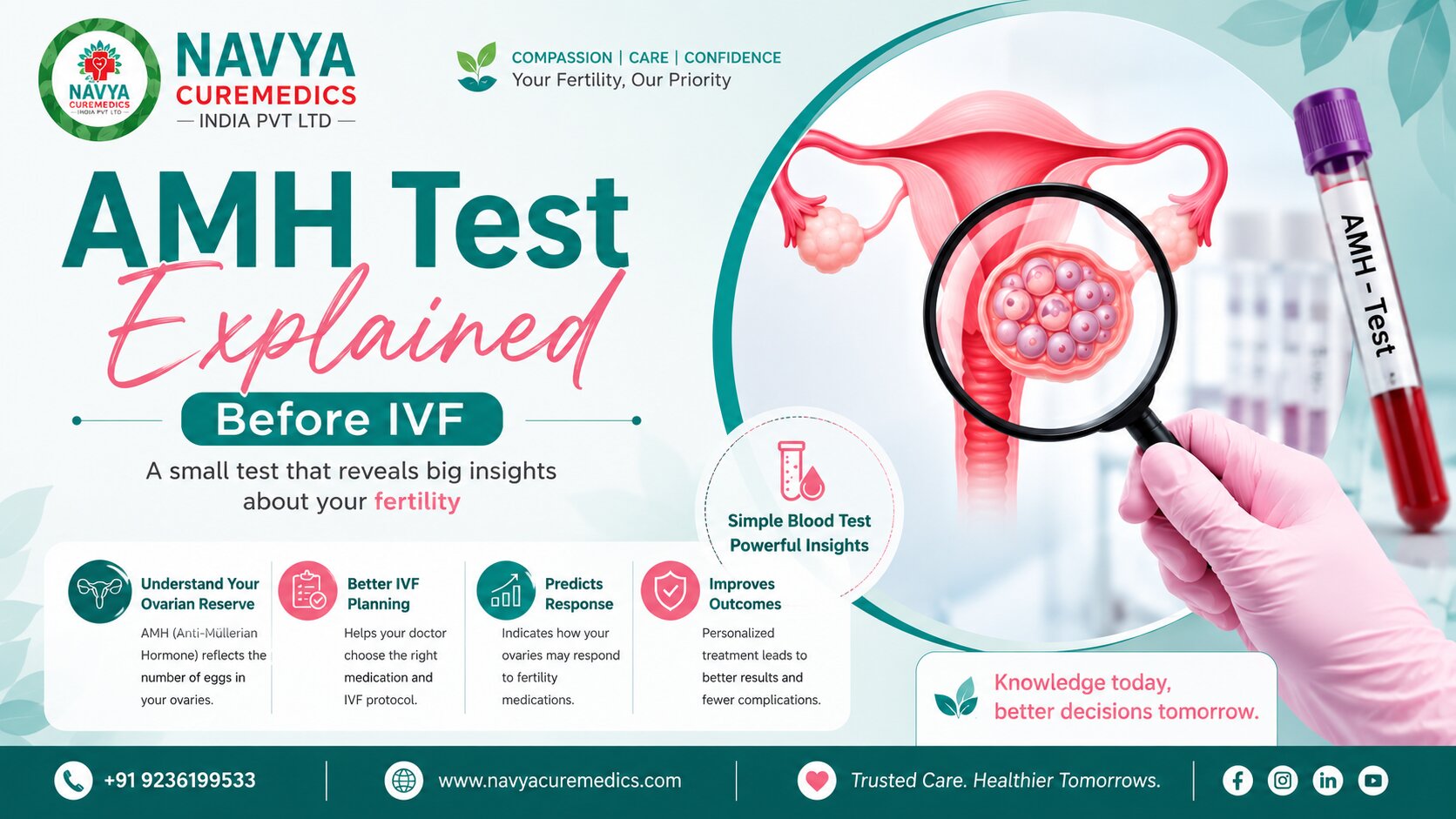
AMH Test Explained Before IVF
If you're planning to undergo In Vitro Fertilization (IVF), one of the first tests your fertility specialist may recommend is the AMH (Anti-Müllerian Hormone) Test. This simple blood test provides valuable information about your ovarian reserve—the number of eggs remaining in your ovaries.
Understanding your AMH level helps your fertility doctor personalize your IVF treatment, choose the right medication dosage, and improve your chances of achieving a successful pregnancy.
What Is an AMH Test?
AMH (Anti-Müllerian Hormone) is produced by the small follicles in a woman's ovaries. The amount of AMH in your blood reflects your ovarian reserve, helping doctors estimate how many eggs are available.
Unlike many other hormone tests, the AMH test can usually be performed on any day of your menstrual cycle, making it a convenient and reliable fertility assessment.
Why Is the AMH Test Important Before IVF?
Before starting IVF, your fertility specialist needs to understand how your ovaries are likely to respond to stimulation medications.
The AMH test helps doctors:
Evaluate ovarian reserve
Predict ovarian response during IVF
Choose the correct hormone dosage
Reduce the risk of poor or excessive ovarian stimulation
Plan a personalized fertility treatment
Set realistic expectations for egg retrieval
What Do AMH Levels Mean?
Low AMH
Low AMH may indicate a reduced ovarian reserve. While it can mean fewer eggs are available, pregnancy is still possible, and many women with low AMH achieve successful IVF outcomes.
Normal AMH
A normal AMH level generally suggests a healthy ovarian reserve and an average response to IVF medications.
High AMH
High AMH levels often indicate a larger ovarian reserve. In some women, especially those with Polycystic Ovary Syndrome (PCOS), very high AMH levels may increase the risk of ovarian hyperstimulation during IVF.
Your doctor will always interpret your AMH result along with your age, ultrasound findings, hormone profile, and medical history.
Can AMH Predict Pregnancy?
No.
One of the biggest misconceptions is that AMH predicts your ability to become pregnant naturally.
AMH mainly estimates egg quantity, not egg quality.
Age remains the most important factor affecting egg quality and IVF success.
How Is the AMH Test Performed?
The procedure is quick and simple.
Blood sample collection
No fasting required (unless advised)
Can usually be done any day of the menstrual cycle
Results are generally available within a few days
Benefits of Getting an AMH Test Before IVF
Better IVF treatment planning
Personalized medication protocol
Improved prediction of ovarian response
Lower risk of complications
Better counseling regarding fertility options
Helps determine whether egg freezing should be considered
Who Should Consider an AMH Test?
An AMH test is recommended for women who:
Are planning IVF
Have been trying to conceive for over a year
Have irregular periods
Have PCOS
Have a family history of early menopause
Are considering egg freezing
Are over 30 and planning pregnancy later
Common Myths About the AMH Test
Myth 1: Low AMH Means You Cannot Get Pregnant
False. Many women with low AMH conceive naturally or through IVF.
Myth 2: High AMH Guarantees Pregnancy
False. High AMH indicates egg quantity, not egg quality.
Myth 3: AMH Is the Only Fertility Test Needed
False. Fertility evaluation also includes ultrasound scans, hormone tests, semen analysis, and overall reproductive health assessment.
Final Thoughts
The AMH test is an important first step before IVF because it helps fertility specialists create a treatment plan that is tailored to your unique needs. While AMH does not determine whether you can become pregnant, it provides valuable information that supports better decision-making and improves IVF planning.
If you're considering IVF or want to understand your fertility health, speak with an experienced fertility specialist and schedule an AMH test.
contact us
NavyaLifePlus
📞 +91 9236199533
🌐 www.navyalifeplus.com
Take the first step toward informed fertility care today.
Frequently Asked Questions (FAQs)
1. What is the AMH test?
The AMH test is a blood test that measures Anti-Müllerian Hormone to estimate a woman's ovarian reserve.
2. Is fasting required for an AMH test?
No. Most women do not need to fast before the test unless instructed otherwise.
3. Can I take the AMH test during my periods?
Yes. The AMH test can usually be performed on any day of the menstrual cycle.
4. Does a low AMH mean IVF will fail?
No. Many women with low AMH achieve successful pregnancies through IVF.
5. Is AMH related to egg quality?
No. AMH reflects egg quantity, while age is the primary indicator of egg quality.
Tags:
AMH TestAMH Before IVFIVF TreatmentOvarian Reserve TestFertility TestWomen's FertilityIVF SuccessAnti Mullerian Hormone Test
← Back to all blogs