Why Are Women Diagnosed with PCOS Increasing Every Year?
By Navya Curemedics India Pvt. Ltd
July 06, 2026
Tips
Why Are Women Diagnosed with PCOS Increasing Every Year?
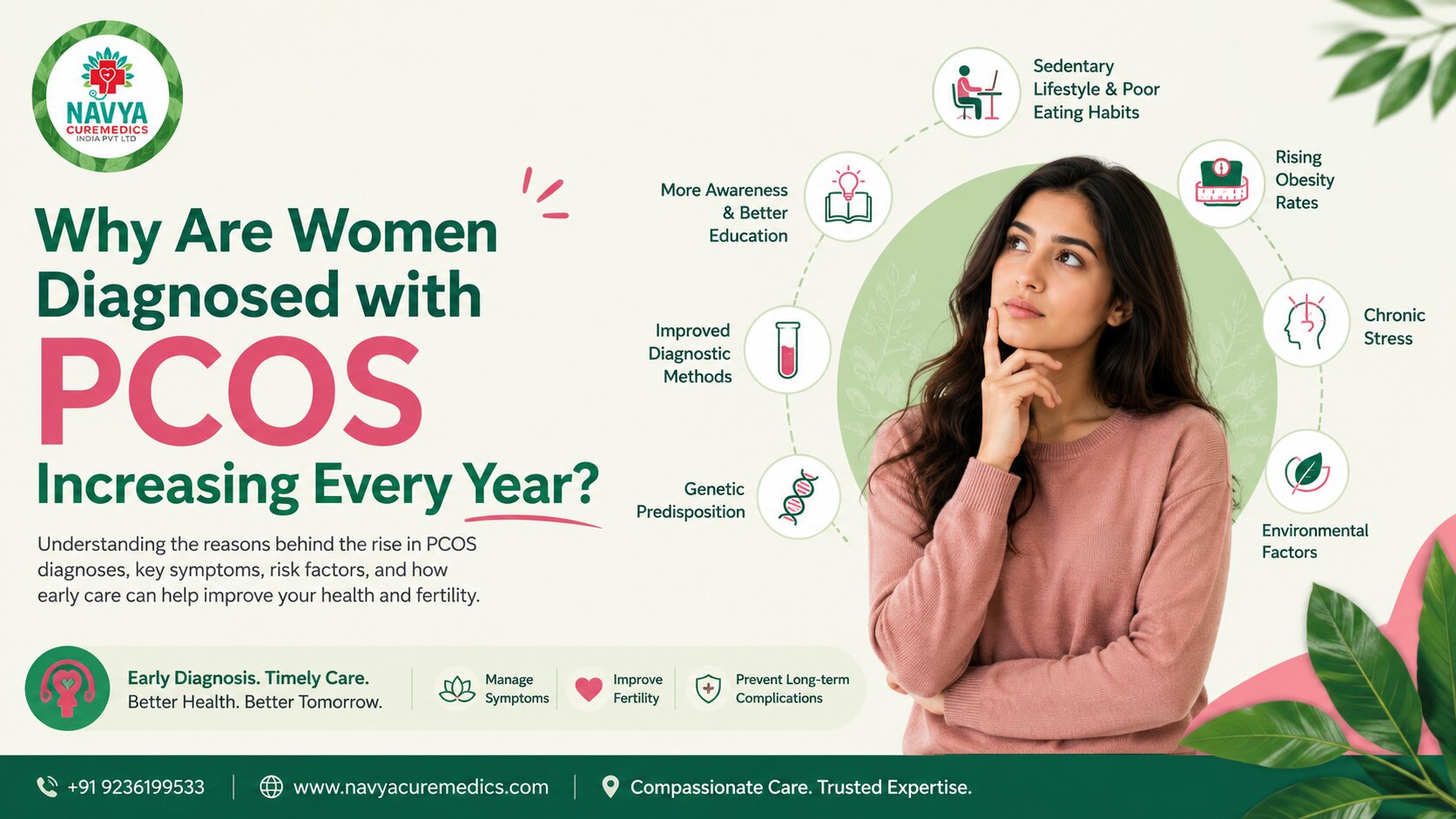
**Polycystic Ovary Syndrome (PCOS)** has become one of the most common hormonal disorders affecting women of reproductive age. Over the last decade, healthcare professionals have observed a steady increase in the number of women being diagnosed with PCOS. While this trend may seem concerning, the rise is influenced by several factors, including improved awareness, better diagnostic techniques, modern lifestyle changes, and increasing rates of obesity and stress.
Understanding why PCOS is becoming more common can help women recognize symptoms early, seek timely medical care, and improve their reproductive and overall health.
What is PCOS?
PCOS (Polycystic Ovary Syndrome) is a hormonal condition that affects how a woman's ovaries function. Women with PCOS often have an imbalance of reproductive hormones, which can interfere with ovulation. This may lead to irregular menstrual cycles, difficulty conceiving, acne, excessive hair growth, weight gain, and multiple small cysts on the ovaries.
PCOS affects millions of women worldwide and is one of the leading causes of infertility.
# Why Are PCOS Diagnoses Increasing?
1. Better Awareness and Education
Today, women have greater access to health information through the internet, social media, and awareness campaigns. As a result, more women recognize symptoms such as irregular periods, acne, or difficulty conceiving and seek medical advice earlier than before.
2. Improved Diagnostic Methods
Advances in medical technology have made diagnosing PCOS more accurate. Hormonal blood tests, pelvic ultrasounds, and updated clinical guidelines enable healthcare providers to identify PCOS at an earlier stage.
3. Sedentary Lifestyle
Modern lifestyles often involve long hours of sitting, limited physical activity, and increased screen time. Combined with unhealthy eating habits, these factors contribute to weight gain and insulin resistance, both of which are strongly associated with PCOS.
4. Rising Obesity Rates
Excess body weight can worsen hormonal imbalances and increase insulin resistance, making PCOS more likely to develop or become more severe. Maintaining a healthy weight plays an important role in managing the condition.
5. Increased Stress Levels
Chronic stress affects hormone production and can disrupt menstrual cycles. High stress levels may also contribute to insulin resistance and inflammation, both of which are linked to PCOS.
6. Environmental Factors
Researchers are studying the impact of environmental pollutants and endocrine-disrupting chemicals found in plastics, cosmetics, and pesticides. These substances may interfere with normal hormone function and increase the risk of developing PCOS.7. Genetic Predisposition PCOS often runs in families. If your mother or sister has PCOS, your chances of developing the condition may be higher. Genetics combined with lifestyle factors can increase the likelihood of diagnosis.
## Common Symptoms of PCOS
Symptoms vary from person to person, but common signs include:
* Irregular or missed menstrual periods
* Difficulty getting pregnant
* Weight gain, especially around the abdomen
* Acne or oily skin
* Excess facial or body hair
* Hair thinning or hair loss
* Darkened skin patches
* Mood changes
* Fatigue
If you experience several of these symptoms, it's important to consult a healthcare professional for evaluation How Does PCOS Affect Fertility?
PCOS is one of the most common causes of infertility because it can prevent regular ovulation. Without the release of an egg, pregnancy becomes more difficult. However, many women with PCOS successfully conceive with lifestyle changes, medications, or fertility treatments such as ovulation induction, IUI, or IVF.
# How is PCOS Diagnosed?
A doctor may recommend:
* Review of medical and menstrual history
* Physical examination
* Hormonal blood tests
* Pelvic ultrasound
* Assessment of symptoms and family history
Early diagnosis allows timely treatment and reduces the risk of long-term complications.
# Treatment Options
Although PCOS cannot be permanently cured, it can be effectively managed through:
* Healthy, balanced nutrition
* Regular physical activity
* Weight management
* Stress reduction
* Hormonal medications
* Ovulation-inducing medications
* Insulin-sensitizing medicines
* Fertility treatments when required
Treatment is personalized based on age, symptoms, and pregnancy goals.
# Can PCOS Be Prevented?
While genetic factors cannot be changed, adopting healthy lifestyle habits can significantly reduce the risk of complications associated with PCOS.
Simple preventive measures include:
* Exercising regularly
* Maintaining a healthy body weight
* Eating a nutrient-rich diet
* Getting adequate sleep
* Managing stress effectively
* Scheduling regular health check-ups
#when Should You Consult a Doctor?
Seek medical advice if you have:
* Irregular or absent menstrual periods
* Difficulty conceiving after trying for several months
* Excess facial or body hair
* Persistent acne
* Rapid or unexplained weight gain
* Hair thinning or scalp hair loss
Early diagnosis and treatment can improve reproductive health and reduce the risk of diabetes, heart disease, and other long-term complications.
# Final Thoughts
The growing number of PCOS diagnoses does not necessarily mean the condition is becoming dramatically more common. Increased awareness, improved medical testing, and lifestyle changes all contribute to more women receiving accurate diagnoses.
The encouraging news is that PCOS is manageable. With early diagnosis, appropriate treatment, and healthy lifestyle choices, most women can successfully manage their symptoms and achieve their fertility goals.
If you are experiencing symptoms of PCOS or planning a pregnancy, don't ignore the signs. Consulting a fertility specialist early can make a significant difference in your reproductive health.
# Contact Navya Cure Medics
**📞 Phone:** +91 9236199533
**🌐 Website:** [www.navyacuremedics.com
**Take the first step toward better hormonal health and fertility with expert guidance from Navya Cure Medics.**
Tags:
PCOSPolycystic Ovary SyndromePCOS symptomsinfertilityirregular periodshormonal imbalancePCOS treatmentwomen's healthfertility clinicNavya Cure Medics
← Back to all blogs