Brain Stroke Warning Signs
By Navya Curemedics India Pvt. Ltd
July 09, 2026
Tips
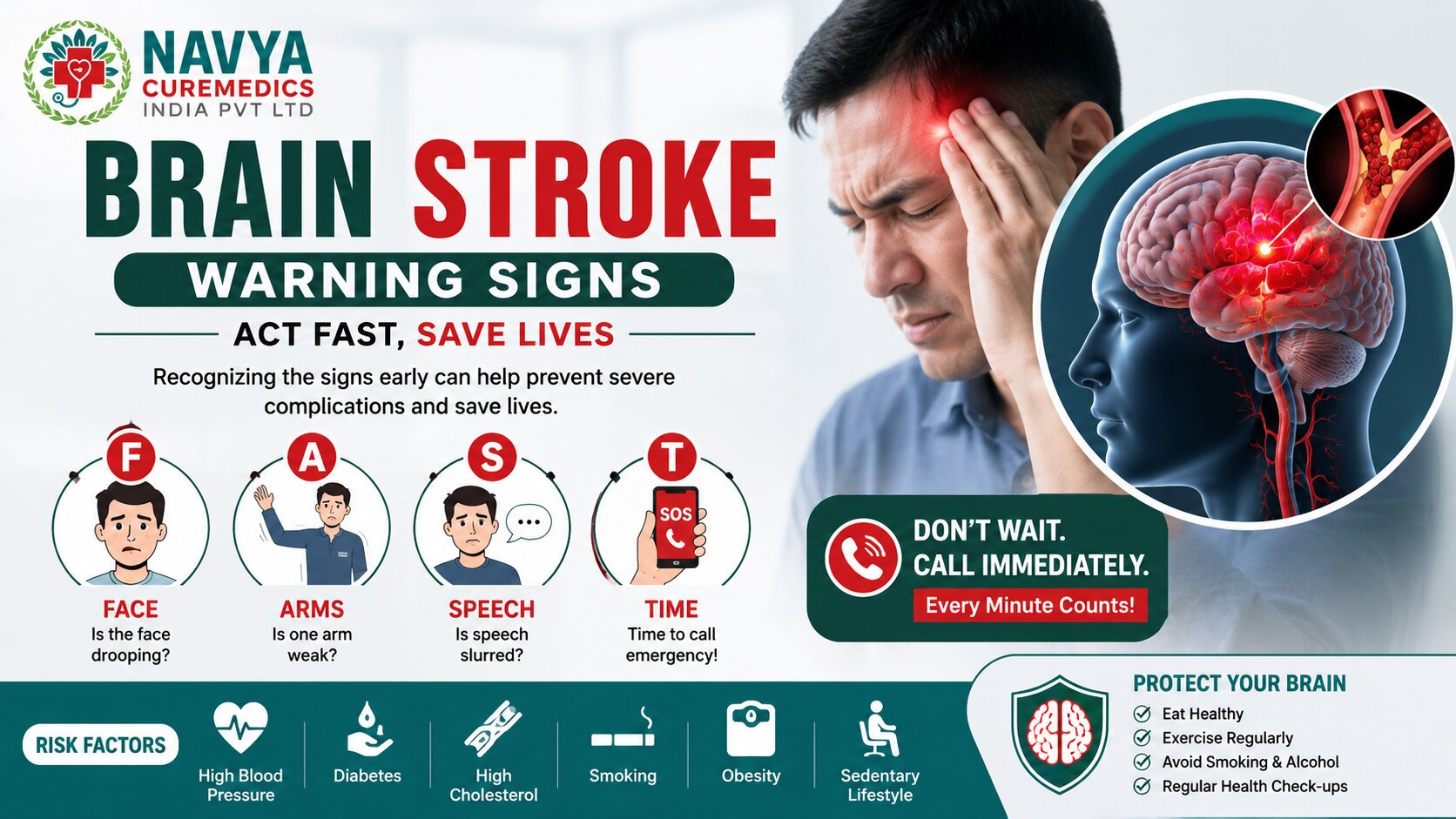
Blog Title: Brain Stroke Warning Signs: Early Symptoms You Should Never Ignore
A brain stroke is a medical emergency that occurs when blood flow to part of the brain is interrupted or when a blood vessel in the brain bursts. Every minute counts during a stroke, as delayed treatment can lead to permanent brain damage, disability, or even death. Recognizing the warning signs early and seeking immediate medical care can significantly improve recovery and save lives.
What Is a Brain Stroke?
A brain stroke occurs when the brain does not receive enough oxygen and nutrients due to blocked or ruptured blood vessels. Without adequate blood supply, brain cells begin to die within minutes.
Types of Brain Stroke
Ischemic Stroke: Caused by a blocked artery and accounts for about 85% of all strokes.
Hemorrhagic Stroke: Caused by bleeding in or around the brain.
Transient Ischemic Attack (TIA): Also called a mini-stroke, it is a temporary blockage that serves as a warning sign for a future stroke.
Common Brain Stroke Warning Signs
1. Sudden Weakness or Numbness
One of the earliest signs is sudden weakness or numbness, especially on one side of the body.
It may affect:
Face
Arm
Leg
If one side suddenly becomes weak or difficult to move, seek emergency medical attention immediately.
2. Facial Drooping
Ask the person to smile.
If one side of the face droops or appears uneven, it could indicate a stroke.
3. Difficulty Speaking
A person experiencing a stroke may:
Slur their speech
Speak unclearly
Have trouble understanding others
Be unable to speak
4. Sudden Vision Problems
Stroke can affect one or both eyes, causing:
Blurred vision
Double vision
Loss of vision
Difficulty seeing clearly
5. Severe Headache
A sudden, intense headache with no obvious cause may indicate a hemorrhagic stroke.
This may be accompanied by:
Vomiting
Dizziness
Confusion
6. Loss of Balance
A stroke may cause:
Trouble walking
Loss of coordination
Sudden dizziness
Difficulty maintaining balance
7. Confusion
The person may suddenly become:
Disoriented
Unable to understand simple instructions
Confused about time or place
Remember the FAST Test
The FAST test helps identify stroke symptoms quickly.
F – Face: Ask the person to smile. Does one side droop?
A – Arms: Ask them to raise both arms. Does one arm drift downward?
S – Speech: Ask them to repeat a simple sentence. Is the speech slurred?
T – Time: Call emergency medical services immediately if any of these signs are present.
Risk Factors for Stroke
Some factors increase the risk of stroke, including:
High blood pressure
Diabetes
High cholesterol
Smoking
Obesity
Heart disease
Physical inactivity
Excessive alcohol consumption
Family history of stroke
Age above 55 years
How to Reduce Your Risk
You can lower your stroke risk by:
Controlling blood pressure
Managing diabetes
Eating a balanced diet
Exercising regularly
Quitting smoking
Limiting alcohol intake
Maintaining a healthy weight
Taking prescribed medications as directed
What to Do If You Suspect a Stroke
If someone shows any warning signs:
Call emergency medical services immediately.
Note the time symptoms began.
Do not give food, water, or medication unless advised by a healthcare professional.
Keep the person calm and comfortable while waiting for medical help.
Prompt treatment can improve outcomes and reduce long-term disability.
When to See a Doctor
Even if symptoms disappear after a few minutes, seek medical evaluation immediately. A transient ischemic attack (TIA) can be an early warning of a more severe stroke.
Conclusion
A brain stroke is a life-threatening condition that requires immediate medical attention. Recognizing the warning signs—such as facial drooping, arm weakness, speech difficulty, vision changes, and sudden severe headache—can save lives. Remember the FAST test and never ignore sudden neurological symptoms.
Early diagnosis and treatment are the keys to reducing complications and improving recovery.
Frequently Asked Questions (FAQs)
1. What is the first sign of a brain stroke?
Sudden weakness or numbness on one side of the face, arm, or leg is often one of the earliest signs.
2. Can a stroke happen without pain?
Yes. Many strokes occur without pain. Symptoms such as facial drooping, slurred speech, or weakness are more common than pain.
3. What should I do if someone is having a stroke?
Call emergency medical services immediately and remember the FAST test. Do not delay treatment.
4. Can young adults have a stroke?
Yes. Although stroke is more common in older adults, younger people can also experience a stroke due to certain medical conditions or lifestyle factors.
5. Can stroke be prevented?
Many strokes can be prevented by managing blood pressure, diabetes, cholesterol, maintaining a healthy lifestyle, and avoiding smoking.
SEO Meta Title
Brain Stroke Warning Signs: Symptoms, FAST Test & Prevention | Navya Curemedics
Meta Description
Learn the early warning signs of a brain stroke, including the FAST test, symptoms, risk factors, prevention tips, and when to seek emergency medical care. Stay informed with Navya Curemedics.
SEO Keywords
Brain stroke warning signs, stroke symptoms, FAST stroke test, signs of stroke, ischemic stroke, hemorrhagic stroke, mini stroke symptoms, stroke prevention, stroke treatment, brain health, Navya Curemedics
This blog is SEO-friendly, human-written, and optimized for healthcare websites. It can be paired with Article Schema, FAQ Schema, Breadcrumb Schema, and complete HTML meta tags for improved search engine visibility.
Tags:
"Brain Stroke Warning SignsStroke SymptomsFAST TestStroke PreventionBrain Stroke TreatmentMini Stroke SymptomsIschemic StrokeHemorrhagic StrokeNeurologyNavya Curemedics">
← Back to all blogs