Fallopian Tube Blockage: Symptoms, Diagnosis
By Navya Curemedics India Pvt. Ltd
July 13, 2026
Tips
Fallopian Tube Blockage: Symptoms, Diagnosis & Treatment
For many couples, becoming parents is a cherished dream. However, infertility can sometimes become an unexpected challenge. One of the most common causes of female infertility is fallopian tube blockage. When one or both fallopian tubes are blocked, it becomes difficult for the egg and sperm to meet, reducing the chances of natural conception.
The good news is that advances in medical science have made it possible to diagnose and treat this condition effectively. At Navya Curemedics, our experienced gynecologists and fertility specialists provide personalized care, advanced diagnostic facilities, and evidence-based treatment options to help women achieve a healthy pregnancy.
Whether you're planning your first pregnancy or have been trying to conceive without success, understanding fallopian tube blockage is the first step toward better reproductive health.
What Are Fallopian Tubes?
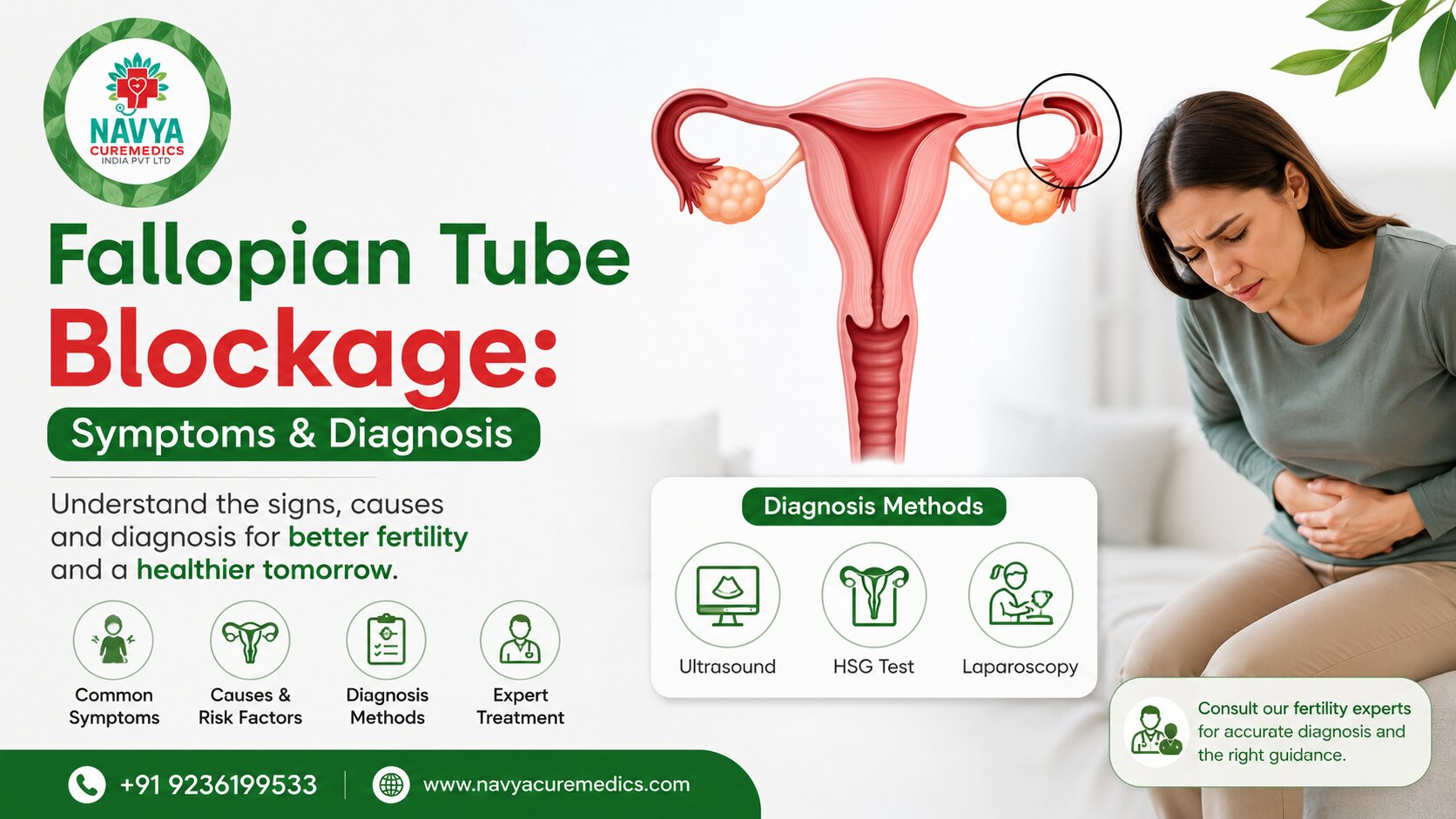
Fallopian tubes are two thin tubes connecting the ovaries to the uterus. Every month, an egg released from the ovary travels through one of these tubes. Fertilization usually occurs inside the fallopian tube before the fertilized egg moves into the uterus for implantation.
If these tubes become partially or completely blocked, the sperm cannot reach the egg, making conception difficult.
Symptoms of Fallopian Tube Blockage
One of the biggest challenges is that many women experience no symptoms until they start trying to conceive. However, some women may notice:
Difficulty getting pregnant
Pelvic or lower abdominal pain
Pain during menstruation
Pain during sexual intercourse
Irregular menstrual cycles
Pain during ovulation
Previous ectopic pregnancy
Chronic pelvic discomfort
If you've been trying to conceive for more than one year without success (or six months if you're over 35), it's important to consult a fertility specialist.
What Causes Fallopian Tube Blockage?
Several medical conditions can damage or block the fallopian tubes.
Common causes include:
Pelvic Inflammatory Disease (PID)
Endometriosis
Tuberculosis affecting reproductive organs
Previous pelvic or abdominal surgery
Scar tissue (adhesions)
Untreated sexually transmitted infections
Hydrosalpinx (fluid-filled tube)
Congenital abnormalities
Early treatment of these conditions can reduce the risk of permanent damage.
How is Fallopian Tube Blockage Diagnosed?
Timely diagnosis helps determine the most suitable treatment option.
1. HSG (Hysterosalpingography)
The HSG test is one of the most commonly recommended investigations.
During this procedure, a contrast dye is injected into the uterus, and X-rays are taken to determine whether the fallopian tubes are open.
Benefits
Quick procedure
Minimal discomfort
Highly accurate
Helps assess uterine abnormalities
2. Pelvic Ultrasound
Ultrasound helps identify:
Ovarian cysts
Fibroids
Hydrosalpinx
Endometriosis
Other reproductive abnormalities
Although ultrasound cannot always confirm tubal blockage, it provides valuable information about reproductive health.
3. Diagnostic Laparoscopy
Laparoscopy is considered one of the most accurate methods for evaluating blocked fallopian tubes.
A small camera is inserted through a tiny incision to directly examine the uterus, ovaries, and fallopian tubes.
It can also treat certain conditions during the same procedure.
Treatment Options
Treatment depends on the location, severity, and underlying cause of the blockage.
Medication
If the blockage is caused by infection, antibiotics may help eliminate the infection before further treatment.
Laparoscopic Surgery
Minimally invasive surgery may remove scar tissue or repair damaged tubes.
This option is suitable for selected patients with mild to moderate tubal disease.
Tubal Reconstructive Surgery
In some women, damaged portions of the fallopian tube can be repaired to improve fertility.
IVF (In Vitro Fertilization)
If both tubes are severely damaged or blocked, IVF is often the most successful treatment.
IVF bypasses the fallopian tubes completely by fertilizing the egg outside the body before transferring the embryo into the uterus.
Can You Get Pregnant with One Blocked Fallopian Tube?
Yes.
If one tube remains healthy and ovulation occurs normally, natural conception is still possible.
However, your doctor may recommend fertility evaluation depending on your age, medical history, and duration of infertility.
When Should You Visit a Gynecologist?
Seek medical advice if you experience:
Inability to conceive after one year
Severe pelvic pain
Painful menstrual periods
Recurrent pelvic infections
History of ectopic pregnancy
Irregular menstrual cycles
Early diagnosis significantly improves treatment success.
How Can You Reduce the Risk?
Although not every case can be prevented, you can reduce your risk by:
Practicing safe sex
Treating infections promptly
Maintaining regular gynecological check-ups
Avoiding delays in treating pelvic pain
Following a healthy lifestyle
Seeking medical advice before planning pregnancy
Why Choose Navya Curemedics?
At Navya Curemedics, we believe every woman deserves compassionate and expert reproductive healthcare.
Our Services Include
Experienced Gynecologists
Fertility Consultation
HSG Test Guidance
Women's Health Screening
Pregnancy Planning
IVF Consultation
Online Doctor Consultation
Affordable Women's Healthcare
We focus on accurate diagnosis, personalized treatment plans, and comprehensive fertility support for every patient.
Conclusion
A blocked fallopian tube can affect fertility, but it doesn't mean you cannot become a parent. With early diagnosis and modern treatment options, many women achieve successful pregnancies naturally or with assisted reproductive technologies.
If you're experiencing symptoms or facing difficulty conceiving, don't ignore the signs. Consulting a fertility specialist at the right time can improve your chances of a healthy pregnancy.
Book your consultation with Navya Curemedics today and take the first step toward your parenthood journey.
Frequently Asked Questions (FAQs)
1. What are the symptoms of blocked fallopian tubes?
Symptoms may include pelvic pain, painful periods, difficulty conceiving, irregular menstrual cycles, or no symptoms at all.
2. Which test is best for diagnosing fallopian tube blockage?
HSG (Hysterosalpingography) is usually the first-line test. Ultrasound and laparoscopy may also be recommended.
3. Can blocked fallopian tubes be treated?
Yes. Treatment options include medication, laparoscopic surgery, tubal reconstruction, or IVF depending on the severity.
4. Can I conceive naturally with one blocked tube?
Yes. Pregnancy is possible if the other tube is healthy and ovulation occurs normally.
5. Is IVF necessary for all women with blocked tubes?
No. IVF is generally recommended when both tubes are severely blocked or other treatments are unlikely to succeed.
Tags:
keywords" content="Fallopian Tube Blockage Treatment in LucknowBlocked Fallopian TubesFemale InfertilityHSG TestFertility Specialist LucknowIVF TreatmentGynecologist in LucknowNavya Curemedics
← Back to all blogs