Viral Gastroenteritis: Everything You Need to Know About Stomach Flu
By Navya Curemedics India Private limited
July 16, 2026
Tips
Introduction
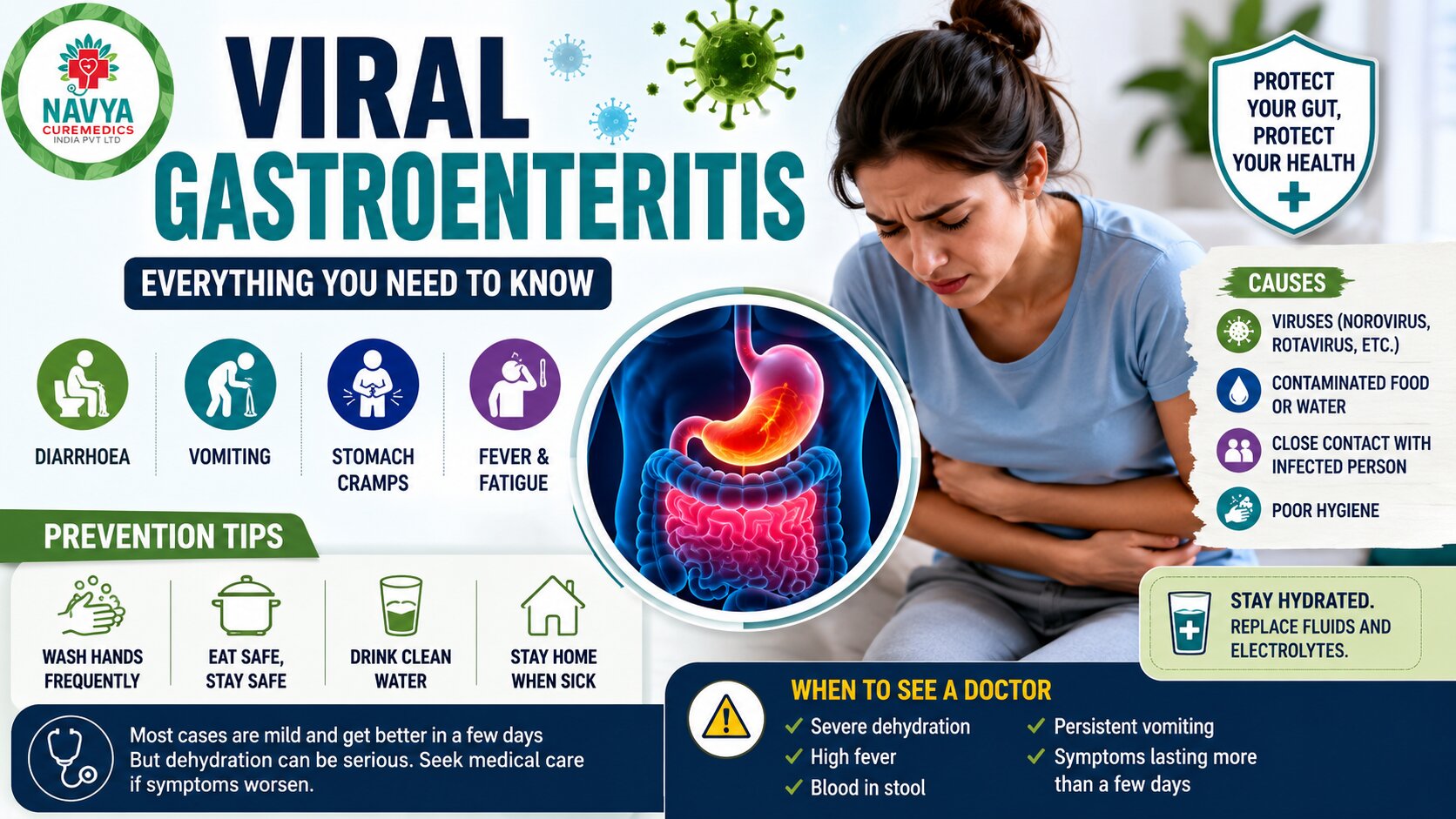
Viral gastroenteritis, commonly known as the “stomach flu,” is a highly contagious infection that affects the stomach and intestines. It can cause symptoms such as diarrhoea, vomiting, stomach cramps, nausea, and fever. Although it is often referred to as the flu, viral gastroenteritis is not related to influenza, which primarily affects the respiratory system.
Every year, millions of people experience viral gastroenteritis, making it one of the most common causes of digestive illness worldwide. While most cases resolve within a few days, severe dehydration and complications can occur, especially in young children, older adults, and individuals with weakened immune systems.
In this guide, we’ll explore the causes, symptoms, treatment options, prevention strategies, and warning signs that indicate when medical attention is needed.
What Is Viral Gastroenteritis?
Viral gastroenteritis is an infection of the digestive tract caused by various viruses. The infection leads to inflammation of the stomach and intestines, resulting in gastrointestinal symptoms.
The condition is highly contagious and can spread quickly through families, schools, workplaces, hospitals, and other crowded environments.
Common Causes of Viral Gastroenteritis
Several viruses can cause gastroenteritis.
1. Norovirus
Norovirus is one of the most common causes of viral gastroenteritis worldwide. It spreads rapidly through contaminated food, water, surfaces, and direct contact with infected individuals.
2. Rotavirus
Rotavirus is a leading cause of severe diarrhoea in infants and young children. Vaccination has significantly reduced cases in many countries.
3. Adenovirus
Certain strains of adenovirus can cause gastrointestinal infections, particularly in children.
4. Astrovirus
Astrovirus infections are generally mild but can affect people of all ages.
How Does Viral Gastroenteritis Spread?
The infection spreads through the fecal-oral route, meaning viruses can enter the body through contaminated food, water, or surfaces.
Common modes of transmission include:
Eating contaminated food
Drinking contaminated water
Touching infected surfaces
Close contact with infected individuals
Sharing utensils, towels, or personal items
Because these viruses are highly contagious, outbreaks can occur quickly in community settings.
Symptoms of Viral Gastroenteritis
Symptoms usually develop within one to three days after exposure and may last from a few days to over a week.
Common Symptoms
Watery diarrhoea
Nausea
Vomiting
Stomach cramps
Abdominal pain
Low-grade fever
Headache
Muscle aches
Fatigue
Severe Symptoms
Some individuals may experience:
Persistent vomiting
Severe dehydration
High fever
Extreme weakness
Inability to keep fluids down
Understanding Dehydration
Dehydration is one of the most serious complications of viral gastroenteritis.
Signs of Dehydration
Excessive thirst
Dry mouth
Dark urine
Dizziness
Reduced urination
Fatigue
Rapid heartbeat
Young children and older adults are particularly vulnerable to dehydration-related complications.
Who Is at Higher Risk?
Anyone can develop viral gastroenteritis, but some groups are more susceptible.
Children
Young children are at increased risk due to developing immune systems and higher vulnerability to dehydration.
Older Adults
Aging can weaken the immune system and make recovery more challenging.
Individuals with Weakened Immunity
People undergoing medical treatments or living with chronic illnesses may experience more severe symptoms.
Travelers
Exposure to contaminated food or water while traveling can increase infection risk.
How Is Viral Gastroenteritis Diagnosed?
Doctors usually diagnose viral gastroenteritis based on symptoms, medical history, and physical examination.
In severe or prolonged cases, additional tests may be recommended, including:
Stool analysis
Blood tests
Hydration assessment
These tests help rule out bacterial infections and other digestive disorders.
Treatment Options
There is no specific cure for most viral gastroenteritis infections. Treatment focuses on symptom relief and preventing dehydration.
1. Stay Hydrated
Hydration is the most important part of treatment.
Recommended fluids include:
Water
Oral rehydration solutions (ORS)
Clear soups
Electrolyte drinks
2. Get Adequate Rest
Rest allows the immune system to recover and fight the infection more effectively.
3. Eat Light Foods
When symptoms begin to improve, introduce bland foods such as:
Bananas
Rice
Applesauce
Toast
Oatmeal
Crackers
4. Avoid Trigger Foods
Avoid:
Spicy foods
Oily foods
Alcohol
Caffeine
Highly processed foods
Prevention Tips
Preventing viral gastroenteritis requires good hygiene and food safety practices.
Wash Hands Frequently
Use soap and water for at least 20 seconds, especially:
Before eating
After using the restroom
After caring for a sick person
Disinfect Frequently Touched Surfaces
Regular cleaning can help prevent the spread of viruses.
Avoid Sharing Personal Items
Do not share utensils, cups, towels, or personal hygiene products.
Practice Safe Food Handling
Wash fruits and vegetables thoroughly
Cook food properly
Store food at safe temperatures
Stay Home When Sick
Avoid spreading the infection to others by staying home until symptoms resolve.
When Should You See a Doctor?
Seek medical attention if you experience:
Severe dehydration
Blood in stool
Persistent vomiting
High fever
Symptoms lasting more than several days
Severe abdominal pain
Young children, elderly individuals, and people with underlying medical conditions should seek care promptly if symptoms worsen.
Complications of Viral Gastroenteritis
Most people recover without complications, but severe cases can lead to:
Dehydration
Electrolyte imbalance
Malnutrition
Hospitalization
Early intervention and proper hydration can significantly reduce these risks.
Tips for Faster Recovery
To support recovery:
Drink small amounts of fluid frequently
Eat bland foods gradually
Get enough sleep
Avoid strenuous activities
Follow medical advice carefully
Recovery times vary, but most individuals improve within a few days.
Conclusion
Viral gastroenteritis is a common yet highly contagious digestive infection that can cause diarrhoea, vomiting, stomach cramps, and dehydration. Although most cases resolve on their own, proper hydration, rest, and good hygiene practices are essential for recovery and prevention.
Understanding the symptoms and warning signs can help individuals seek timely medical care when needed. If symptoms become severe or dehydration develops, consult a healthcare professional without delay.
Tags:
viral gastroenteritisstomach flugastroenteritis symptomsviral stomach infectiondiarrhoea and vomitinggastroenteritis treatmentdigestive infectionstomach flu preventiondehydration symptoms
← Back to all blogs