Meta Title (60 Characters) How Did India Become the Diabetes Capital of the World?
By Navya Curemedics India Private limited
July 24, 2026
Tips
Introduction
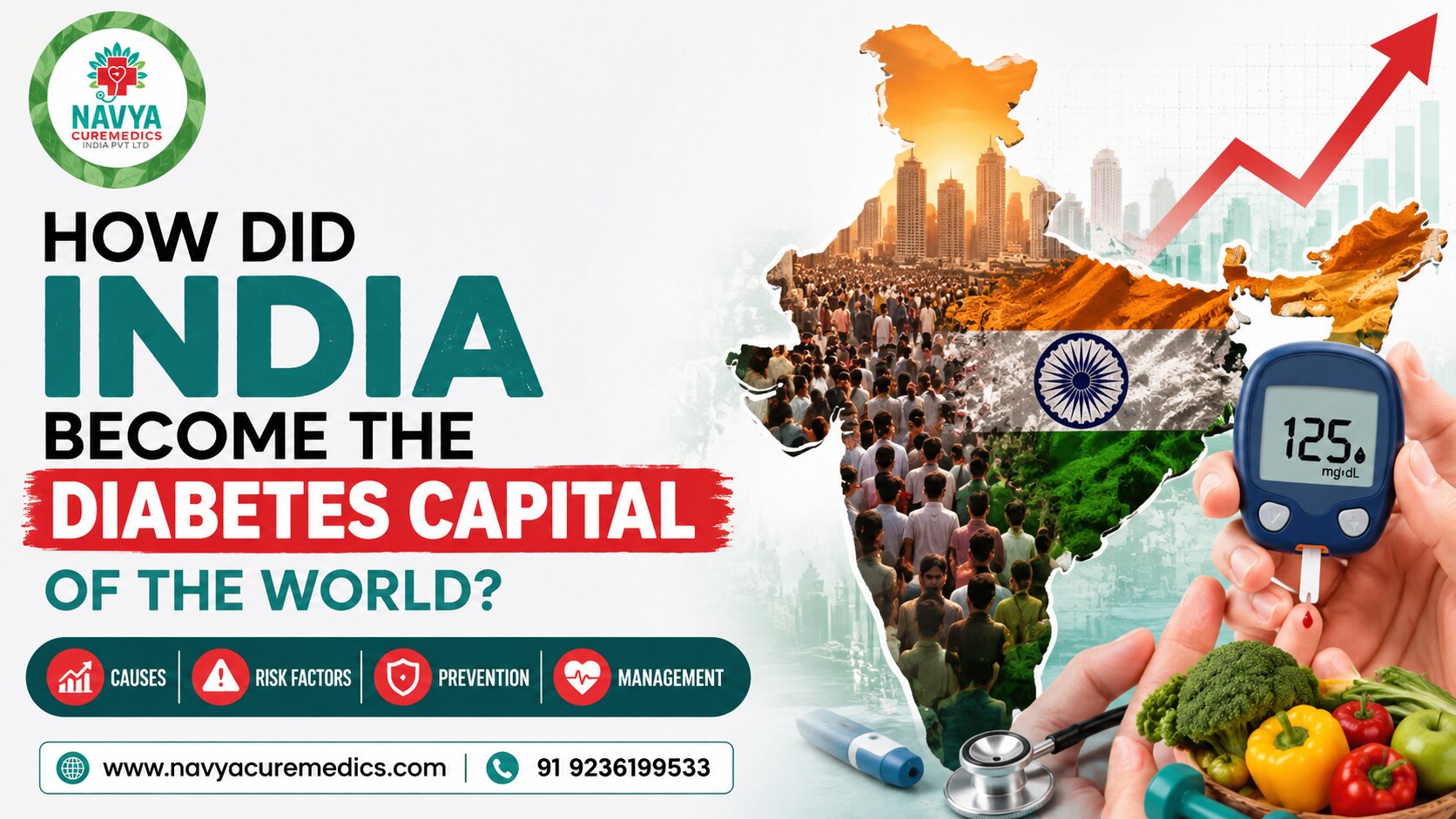
India is often referred to as the "Diabetes Capital of the World" because it has one of the largest populations of people living with diabetes. According to recent estimates, more than 100 million Indians are living with diabetes, while millions more have prediabetes and remain undiagnosed. The increasing number of diabetes cases is becoming a major public health concern, affecting people of all age groups—including young adults.
The rise in diabetes is not due to a single reason. Rapid urbanization, unhealthy diets, sedentary lifestyles, obesity, stress, genetic predisposition, and lack of regular health checkups have all contributed to this growing epidemic.
This article explains why India has become the diabetes capital of the world, the major causes, warning signs, complications, and effective ways to prevent and manage diabetes.
What is Diabetes?
Diabetes Mellitus is a chronic condition in which the body cannot regulate blood sugar (glucose) properly.
There are three major types:
Type 1 Diabetes
Autoimmune disease
Usually develops in childhood
Requires lifelong insulin
Type 2 Diabetes
Most common (90–95% of cases)
Related to insulin resistance
Strongly associated with lifestyle factors
Gestational Diabetes
Occurs during pregnancy
Usually resolves after delivery
Increases future diabetes risk
Why is India Called the Diabetes Capital of the World?
Several reasons have contributed to the increasing prevalence of diabetes in India.
1. Large Population
India has the world's largest population, naturally leading to a higher number of diabetes cases.
2. Genetic Susceptibility
South Asians have a higher tendency to develop:
Insulin resistance
Central obesity
Higher body fat despite normal weight
Metabolic syndrome
Even individuals with a normal BMI may develop diabetes.
3. Rapid Urbanization
Urban lifestyles have dramatically changed daily routines.
Examples include:
Desk jobs
Less walking
Increased screen time
Reduced physical activity
4. Poor Dietary Habits
Modern diets are rich in:
Refined carbohydrates
White rice
Sugary beverages
Junk food
Processed snacks
Fast food
Bakery products
Frequent consumption of these foods increases blood sugar spikes and insulin resistance.
5. Rising Obesity
Obesity is one of the strongest risk factors for Type 2 diabetes.
Excess abdominal fat significantly increases insulin resistance.
6. Physical Inactivity
Many Indians:
Rarely exercise
Spend hours sitting
Use vehicles for short distances
Sleep less
A sedentary lifestyle increases diabetes risk.
7. Stress and Poor Sleep
Chronic stress increases cortisol levels, leading to:
Increased blood sugar
Weight gain
Hormonal imbalance
Poor sleep further worsens insulin sensitivity.
8. Lack of Regular Screening
Millions of Indians remain unaware they have diabetes because:
Symptoms develop slowly
Regular health checkups are ignored
Blood sugar testing is delayed
Major Risk Factors
You are at higher risk if you have:
Family history of diabetes
Overweight or obesity
High blood pressure
High cholesterol
PCOS
Sedentary lifestyle
Age above 35 years
Smoking
Excess alcohol
Stress
Previous gestational diabetes
Common Symptoms of Diabetes
Early symptoms include:
Frequent urination
Increased thirst
Excessive hunger
Fatigue
Blurred vision
Slow wound healing
Weight loss
Frequent infections
Tingling in hands and feet
Many patients have no symptoms in the early stages.
Complications of Uncontrolled Diabetes
If diabetes remains untreated, it can damage multiple organs.
Heart Disease
People with diabetes have a much higher risk of:
Heart attack
Stroke
High blood pressure
Kidney Damage
Diabetes is one of the leading causes of kidney failure.
Eye Problems
High blood sugar can damage the retina, causing diabetic retinopathy and vision loss.
Nerve Damage
Common symptoms include:
Burning feet
Numbness
Tingling
Foot ulcers
Poor Immunity
Diabetes increases susceptibility to infections.
Diabetic Foot
Poor circulation and nerve damage increase the risk of ulcers and amputations.
Can Diabetes Be Prevented?
Yes. Most Type 2 diabetes cases can be prevented through healthy lifestyle changes.
Tips to Prevent Diabetes
Eat a Balanced Diet
Choose:
Whole grains
Fresh vegetables
Fruits
Pulses
Lean protein
Healthy fats
Avoid:
Sugary drinks
Refined flour
Processed foods
Excess sweets
Exercise Daily
Aim for:
At least 150 minutes of moderate exercise each week
Brisk walking
Cycling
Swimming
Strength training
Maintain Healthy Weight
Losing just 5–10% of body weight significantly lowers diabetes risk.
Get Regular Health Checkups
Recommended tests include:
Fasting Blood Sugar
HbA1c
Postprandial Blood Sugar
Lipid Profile
Blood Pressure
Kidney Function Tests
Sleep Well
Adults should aim for 7–8 hours of quality sleep each night.
Manage Stress
Practice:
Yoga
Meditation
Deep breathing
Walking
Hobbies
Quit Smoking
Smoking significantly increases diabetes complications.
Diabetes Management
If diagnosed with diabetes:
Follow your doctor's advice.
Take medicines regularly.
Monitor blood sugar levels.
Eat a diabetes-friendly diet.
Exercise consistently.
Maintain a healthy weight.
Get annual eye, kidney, and foot examinations.
Why Early Diagnosis Matters
Early detection helps:
Prevent complications
Reduce healthcare costs
Improve quality of life
Protect the heart, kidneys, and eyes
Increase life expectancy
Regular screening is especially important for individuals with a family history of diabetes or other risk factors.
Final Thoughts
India's growing diabetes burden is driven by a combination of genetic factors, changing lifestyles, unhealthy diets, increasing obesity, and lack of preventive healthcare. While the numbers are alarming, diabetes is largely preventable and manageable with timely intervention.
Adopting healthy eating habits, staying physically active, maintaining a healthy weight, and undergoing regular health checkups can significantly reduce the risk of developing Type 2 diabetes. Awareness, early diagnosis, and consistent management are the keys to reversing the diabetes trend in India.
Tags:
diabetes symptomsdiabetes causesdiabetes preventionblood sugar controlinsulin resistanceobesity and diabetesdiabetes risk factorsHbA1c testprediabetesdiabetes management
← Back to all blogs