AI in Healthcare 2026: How Artificial Intelligence is Transforming Diagnosis & Patient Care | Navya Curemedics .
By Navya Curemedics India Private limited
July 25, 2026
Tips
Introduction
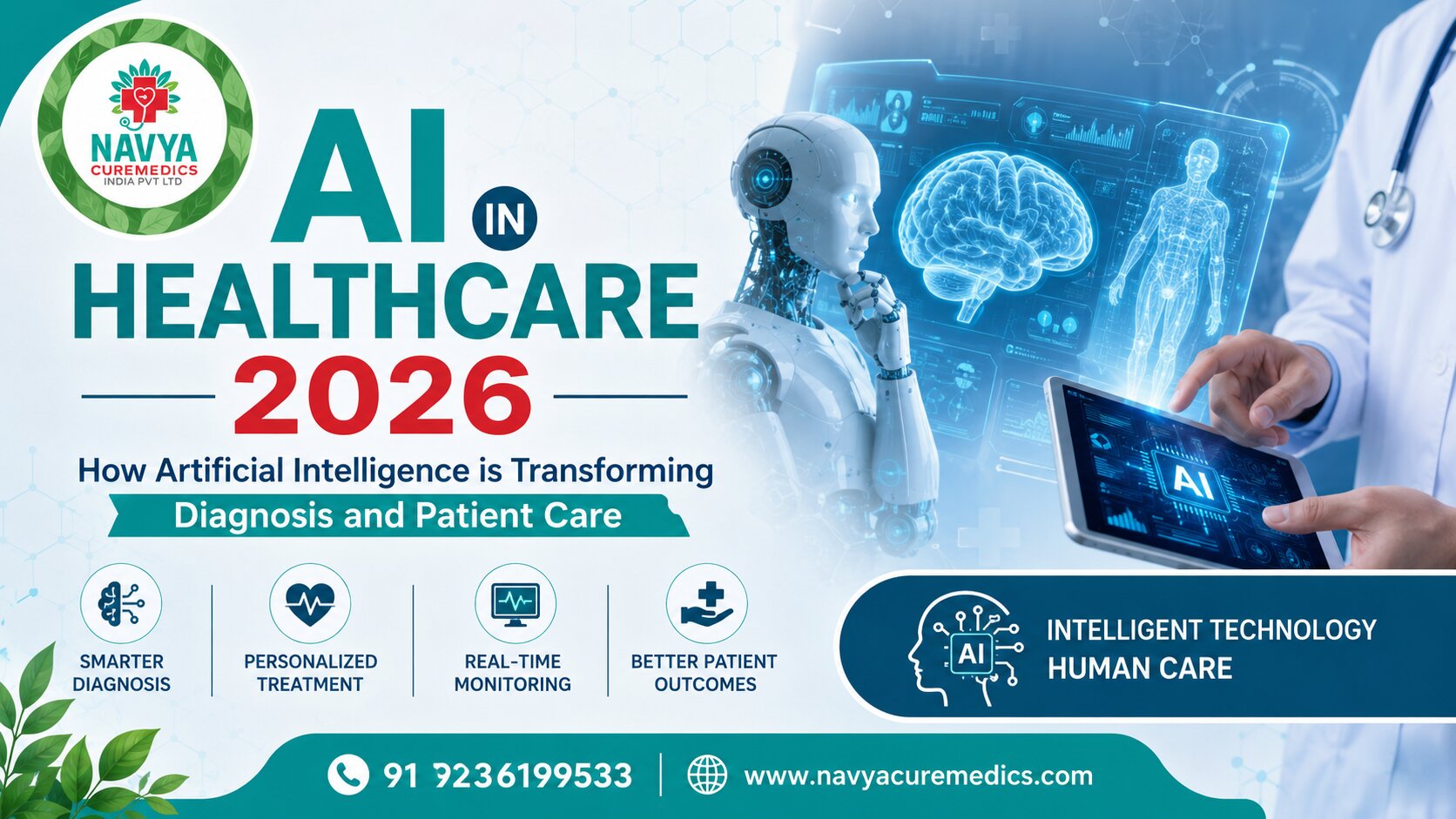
Artificial Intelligence (AI) is no longer a futuristic concept—it has become an integral part of modern healthcare. In 2026, AI is revolutionizing the way diseases are diagnosed, treatments are planned, and patients receive personalized care. From detecting cancer at an early stage to assisting doctors in making accurate clinical decisions, AI is improving healthcare outcomes while reducing costs and medical errors.
At Navya Cure Medics, we believe that combining advanced technology with experienced healthcare professionals leads to better patient care. AI supports doctors by providing data-driven insights, allowing them to focus more on patient well-being and personalized treatment.
This article explores how AI is transforming diagnosis, treatment planning, patient monitoring, and the future of healthcare.
What is Artificial Intelligence in Healthcare?
Artificial Intelligence in healthcare refers to computer systems that can analyze medical data, recognize patterns, make predictions, and assist healthcare professionals in diagnosing diseases and recommending treatment options.
Unlike traditional software, AI continuously learns from medical records, imaging data, laboratory reports, and patient outcomes to improve its accuracy over time.
Healthcare AI commonly uses:
Machine Learning (ML)
Deep Learning
Natural Language Processing (NLP)
Computer Vision
Predictive Analytics
Why AI is Becoming Essential in Healthcare
Healthcare systems worldwide face several challenges:
Increasing patient populations
Shortage of medical specialists
Rising healthcare costs
Large amounts of medical data
Need for faster diagnosis
AI helps overcome these challenges by improving efficiency while supporting doctors with evidence-based recommendations.
How AI is Transforming Disease Diagnosis
1. Faster Medical Imaging Analysis
AI-powered imaging systems can analyze:
X-rays
MRI scans
CT scans
Mammograms
Ultrasounds
These systems detect abnormalities within seconds, helping radiologists identify diseases earlier.
Examples include:
Lung cancer detection
Brain tumors
Stroke identification
Breast cancer screening
Bone fractures
AI does not replace radiologists—it enhances diagnostic accuracy.
2. Early Detection of Chronic Diseases
AI algorithms can identify high-risk patients before symptoms become severe.
AI helps detect:
Diabetes
Hypertension
Kidney disease
Heart disease
Liver disorders
Earlier diagnosis often leads to better treatment outcomes and fewer complications.
3. Cancer Diagnosis
AI assists oncologists by:
Identifying suspicious lesions
Comparing imaging results
Predicting tumor growth
Supporting biopsy decisions
Monitoring treatment response
This enables earlier cancer detection and more personalized treatment plans.
AI in Personalized Patient Care
Every patient is different.
AI analyzes:
Medical history
Genetic information
Lifestyle
Laboratory reports
Medication history
Based on this information, doctors can create personalized treatment plans that improve effectiveness and reduce side effects.
AI in Clinical Decision Support
AI-powered Clinical Decision Support Systems (CDSS) assist doctors by:
Reviewing patient records
Suggesting possible diagnoses
Recommending investigations
Highlighting drug interactions
Identifying allergies
Providing treatment guidelines
The final medical decision always remains with qualified healthcare professionals.
AI-Powered Remote Patient Monitoring
Wearable devices now continuously monitor:
Heart rate
Blood pressure
Blood glucose
Oxygen saturation
Sleep quality
Physical activity
AI analyzes this data in real time and alerts doctors when abnormal patterns are detected.
This is especially beneficial for:
Elderly patients
Cardiac patients
Diabetes management
Hypertension monitoring
AI in Emergency Medicine
AI helps emergency departments by:
Predicting patient deterioration
Prioritizing emergency cases
Supporting stroke diagnosis
Identifying heart attacks earlier
Reducing treatment delays
Rapid decision-making can significantly improve survival rates.
AI in Drug Discovery
Traditional drug development takes years.
AI accelerates this process by:
Identifying potential drug candidates
Predicting effectiveness
Reducing research costs
Improving clinical trial selection
This helps bring life-saving medicines to patients faster.
AI and Robotic Surgery
Modern robotic-assisted surgery uses AI to improve:
Precision
Smaller incisions
Reduced blood loss
Faster recovery
Lower infection risk
AI assists surgeons but does not replace their expertise.
Benefits of AI in Healthcare
Improved Diagnostic Accuracy
AI identifies patterns that may be difficult for humans to detect.
Faster Diagnosis
Patients receive quicker results and earlier treatment.
Personalized Treatment
AI recommends therapies tailored to each patient's medical profile.
Reduced Medical Errors
AI helps identify medication interactions and diagnostic inconsistencies.
Better Resource Management
Hospitals can optimize scheduling, staffing, and patient flow.
Enhanced Preventive Care
Predictive analytics helps identify health risks before disease develops.
Challenges of AI in Healthcare
Although AI offers many benefits, several challenges remain:
Data Privacy
Patient data must be securely stored and protected.
Ethical Concerns
Healthcare providers must ensure AI decisions are transparent and unbiased.
Regulatory Compliance
AI systems must comply with healthcare regulations and quality standards.
Human Oversight
AI should support—not replace—medical professionals.
The Future of AI in Healthcare
By 2030, AI is expected to play a larger role in:
Precision medicine
Predictive diagnostics
Robotic surgery
Virtual health assistants
Digital pathology
Remote healthcare
Mental health support
Hospital automation
Future healthcare will combine human expertise with intelligent technology to deliver safer, faster, and more effective care.
Why Choose Navya Cure Medics?
At Navya Cure Medics, we are committed to providing patient-centered healthcare supported by modern medical advancements.
Our approach focuses on:
Experienced healthcare professionals
Evidence-based medical care
Advanced diagnostic services
Personalized treatment plans
Compassionate patient support
Preventive healthcare guidance
We believe technology should empower doctors and improve patient outcomes—not replace the human touch.
Conclusion
Artificial Intelligence is transforming healthcare in 2026 by improving diagnostic accuracy, enabling personalized treatments, supporting doctors in clinical decision-making, and enhancing patient monitoring. While AI cannot replace experienced medical professionals, it serves as a powerful tool that helps deliver faster, safer, and more effective healthcare.
Tags:
Healthcare 2026Artificial Intelligence HealthcareDiagnosisPatient CareMedical Technologyin HospitalsDisease DetectionMedical ImagingFuture HealthcareHealthcare InnovationNavya CuremedicsHealthcare Indiafor DoctorsPersonalized Healthcare
← Back to all blogs