World Head and Neck Cancer Day: Symptoms, Risk Factors & Prevention
By Navya Curemedics India Private limited
July 27, 2026
Tips
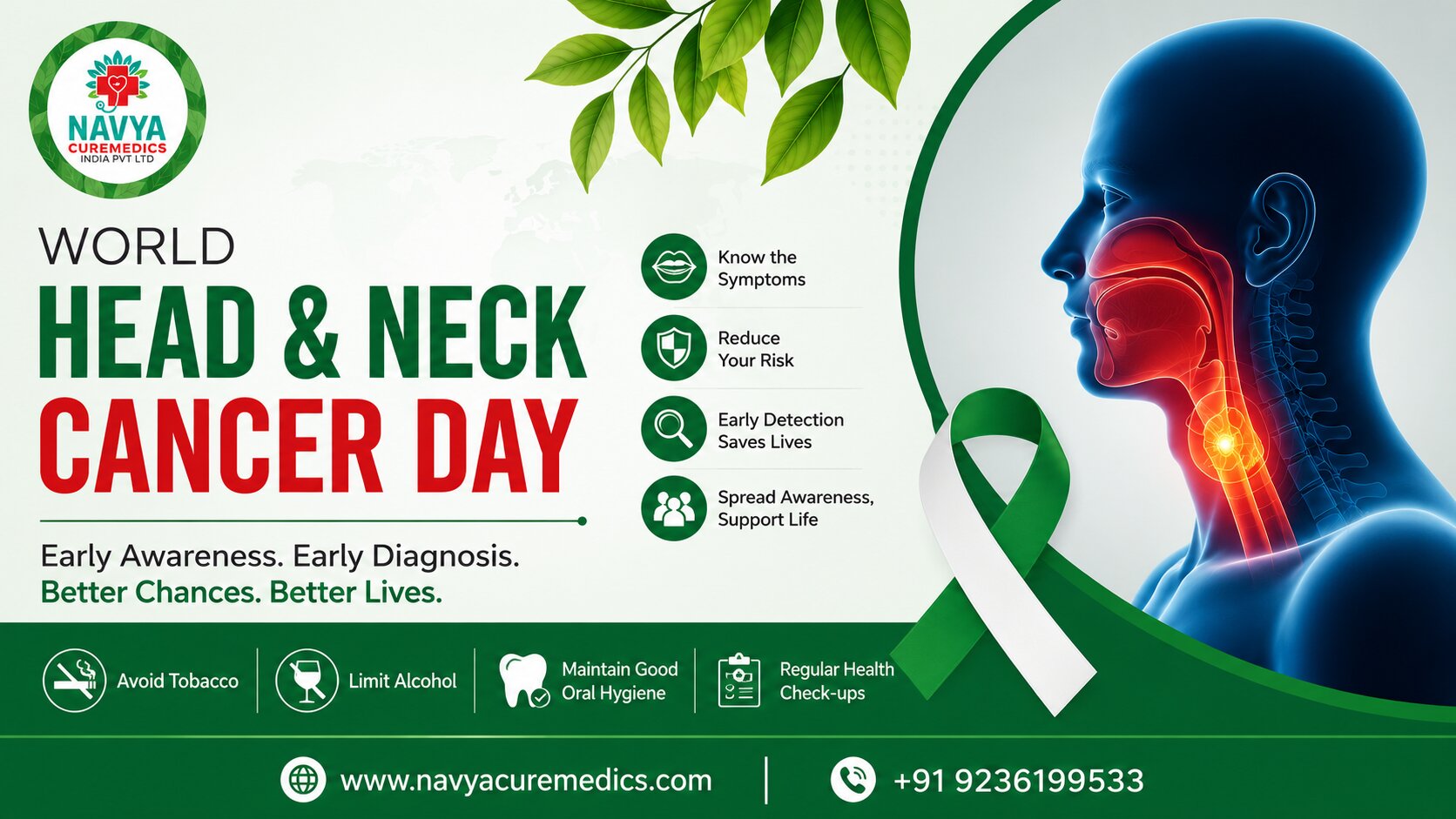
Every year, World Head and Neck Cancer Day is observed to raise awareness about cancers affecting the mouth, throat, voice box (larynx), nose, sinuses, salivary glands, and thyroid. Millions of people worldwide are affected by these cancers, yet many cases can be diagnosed early through awareness and timely medical consultation.
The theme of this awareness day is simple but powerful: Early Detection Saves Lives.
At Navya Curemedics, we believe that educating people about cancer symptoms, risk factors, and preventive measures can significantly improve treatment outcomes and quality of life.
What Is Head and Neck Cancer?
Head and neck cancer refers to a group of cancers that develop in different parts of the head and neck region, including:
Mouth (Oral Cavity)
Tongue
Lips
Throat (Pharynx)
Voice Box (Larynx)
Nose and Nasal Cavity
Sinuses
Salivary Glands
Most of these cancers begin in the squamous cells lining the moist surfaces inside the head and neck.
Why Is World Head and Neck Cancer Day Important?
Many people ignore early symptoms because they seem minor or resemble common infections. Delayed diagnosis often leads to advanced-stage cancer, making treatment more difficult.
This awareness day encourages people to:
Learn the warning signs
Quit tobacco use
Reduce alcohol consumption
Maintain good oral hygiene
Undergo regular health check-ups
Seek medical advice for persistent symptoms
Common Symptoms of Head and Neck Cancer
Recognizing the symptoms early can make a significant difference.
Watch for these warning signs:
A mouth ulcer that doesn't heal within two weeks
Persistent sore throat
Difficulty swallowing
Hoarseness or changes in voice
Lump or swelling in the neck
White or red patches inside the mouth
Persistent ear pain
Unexplained weight loss
Bleeding from the mouth or nose
Difficulty opening the mouth
If these symptoms last for more than two weeks, consult a healthcare professional promptly.
Major Risk Factors
Several lifestyle and environmental factors increase the risk of developing head and neck cancer.
1. Tobacco Use
Smoking cigarettes, cigars, bidis, or using smokeless tobacco significantly increases the risk.
2. Excessive Alcohol Consumption
Heavy alcohol intake increases cancer risk, especially when combined with tobacco use.
3. Human Papillomavirus (HPV)
Certain HPV infections are associated with cancers of the throat and oropharynx.
4. Poor Oral Hygiene
Untreated dental issues and poor oral care may contribute to oral cancers.
5. Sun Exposure
Excessive UV exposure increases the risk of lip cancer.
6. Poor Nutrition
A diet lacking fruits and vegetables may reduce the body's natural defenses against cancer.
Who Is at Higher Risk?
You may be at greater risk if you:
Use tobacco regularly
Consume alcohol frequently
Are over 40 years of age
Have HPV infection
Have a family history of cancer
Work in environments with exposure to chemicals or dust
Have poor oral hygiene
How Is Head and Neck Cancer Diagnosed?
Early diagnosis improves treatment success.
Doctors may recommend:
Physical examination
Oral examination
Endoscopy
Imaging tests (CT Scan, MRI, PET Scan)
Biopsy
Blood tests
Timely diagnosis helps determine the stage of cancer and guides appropriate treatment.
Treatment Options
Treatment depends on the cancer type, stage, and overall health of the patient.
Common treatment options include:
Surgery
Removes cancerous tissue while preserving function whenever possible.
Radiation Therapy
Uses high-energy radiation to destroy cancer cells.
Chemotherapy
Medicines that target rapidly growing cancer cells.
Targeted Therapy
Targets specific proteins or genetic changes in cancer cells.
Immunotherapy
Helps the body's immune system recognize and fight cancer.
Many patients receive a combination of these treatments for better outcomes.
Prevention Tips
Although not all cancers are preventable, adopting healthy habits can significantly reduce your risk.
Protect Yourself by:
Avoiding tobacco products
Limiting alcohol consumption
Practicing good oral hygiene
Eating a balanced diet rich in fruits and vegetables
Getting vaccinated against HPV when recommended
Using lip protection with SPF outdoors
Scheduling regular dental and medical check-ups
Importance of Early Detection
When diagnosed in its early stages, head and neck cancer is often more treatable.
Benefits of early detection include:
Better survival rates
Less extensive treatment
Improved quality of life
Lower risk of cancer spread
Faster recovery
Never ignore symptoms that persist beyond two weeks.
Frequently Asked Questions (FAQs)
What is World Head and Neck Cancer Day?
It is an awareness initiative dedicated to educating people about head and neck cancers, their symptoms, prevention, and the importance of early diagnosis.
What are the first signs of head and neck cancer?
Common early signs include mouth ulcers that don't heal, sore throat, difficulty swallowing, hoarseness, neck lumps, and white or red patches inside the mouth.
Can head and neck cancer be prevented?
While not all cases are preventable, avoiding tobacco, limiting alcohol, maintaining oral hygiene, eating a healthy diet, and regular check-ups can significantly reduce the risk.
Who is most at risk?
People who smoke, consume alcohol heavily, have HPV infection, poor oral hygiene, or are over 40 years of age have a higher risk.
Is head and neck cancer curable?
Yes. Many cases are successfully treated when detected early.
Final Thoughts
World Head and Neck Cancer Day reminds us that awareness, prevention, and early diagnosis can save lives. Persistent symptoms such as mouth sores, hoarseness, difficulty swallowing, or neck lumps should never be ignored.
Making healthy lifestyle choices, attending routine health check-ups, and seeking medical attention promptly when symptoms appear can greatly improve outcomes.
Tags:
World Head and Neck Cancer DayHead and Neck CancerOral Cancer AwarenessHead and Neck Cancer SymptomsCancer PreventionEarly Cancer DetectionMouth CancerThroat CancerVoice Box CancerCancer AwarenessOral HealthCancer TreatmentHead and Neck OncologyNavya Curemedics
← Back to all blogs